Hi!
I'm Vivian (Yanzhu) Chen, an MFA Game Design student at New York University. My passion lies in crafting digital and tabletop games, along with skills in 2D/3D art, level design, coding, and critical writings.
VideoGames
-
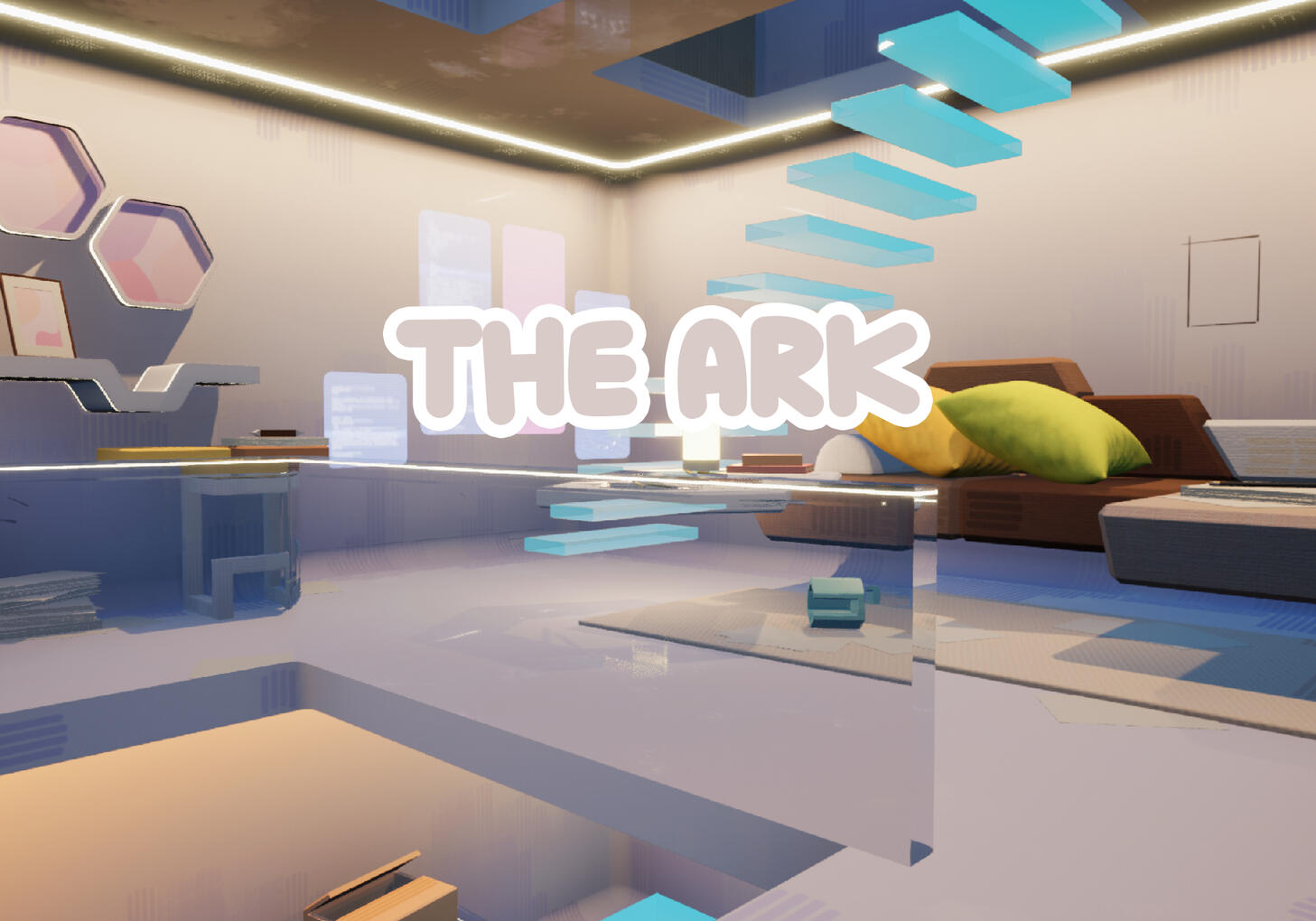
The Ark
-

White Bird
-

Wander
-
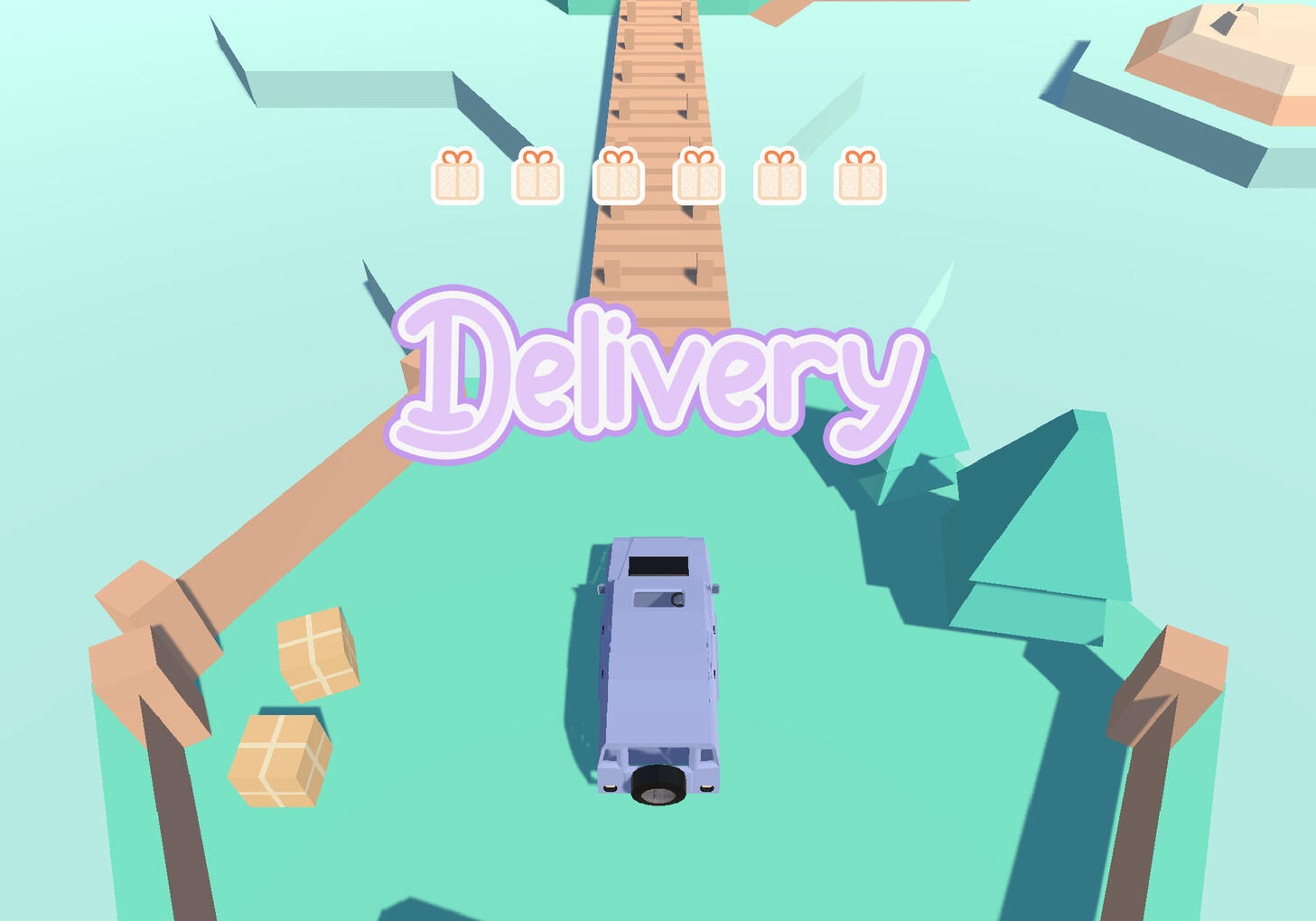
Delivery
-
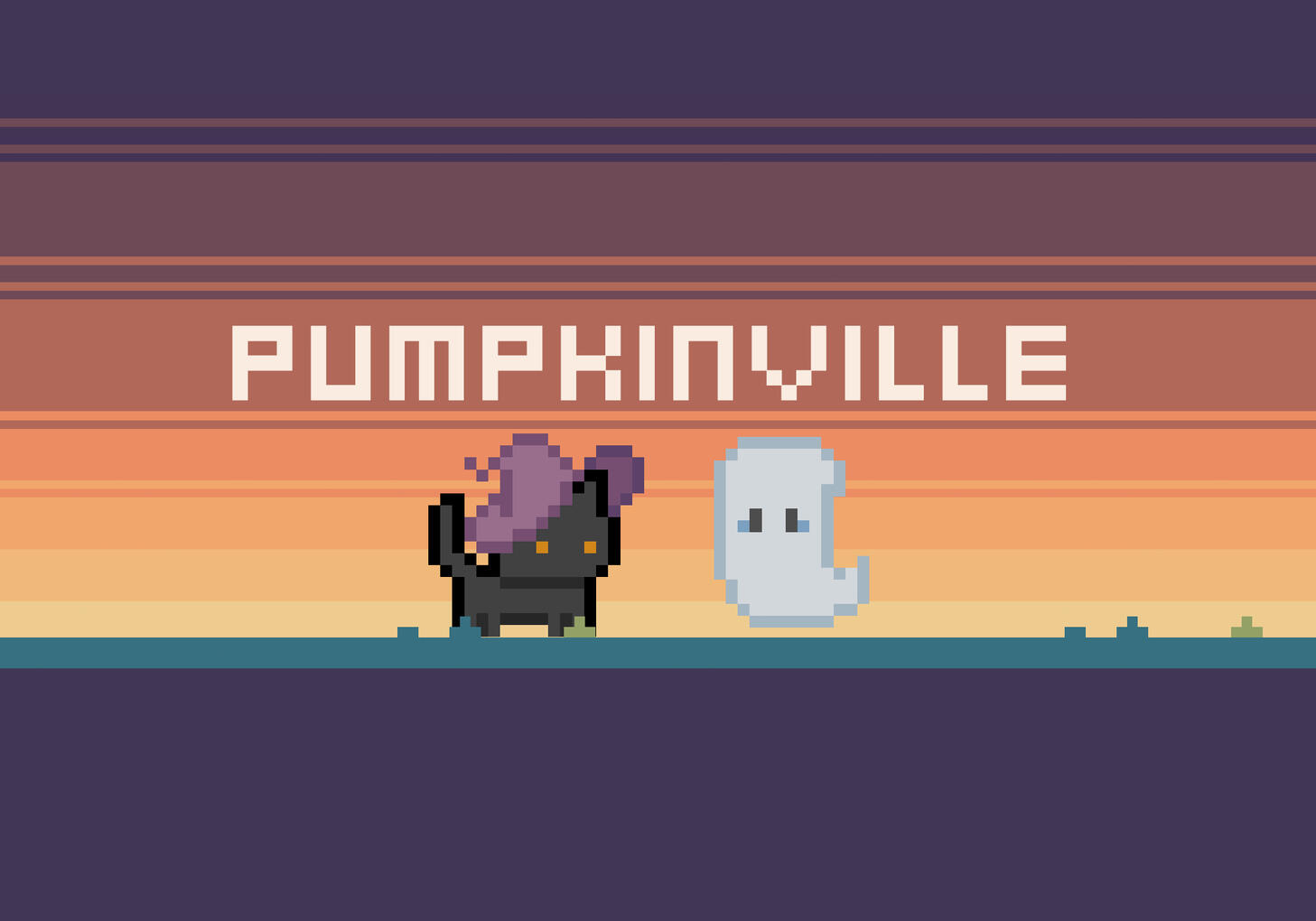
Pumpkinville
-
Garden Galaxies
TabletopGames
-

Treasure Hunt: Island
-

The Game
Drawing & Art
-
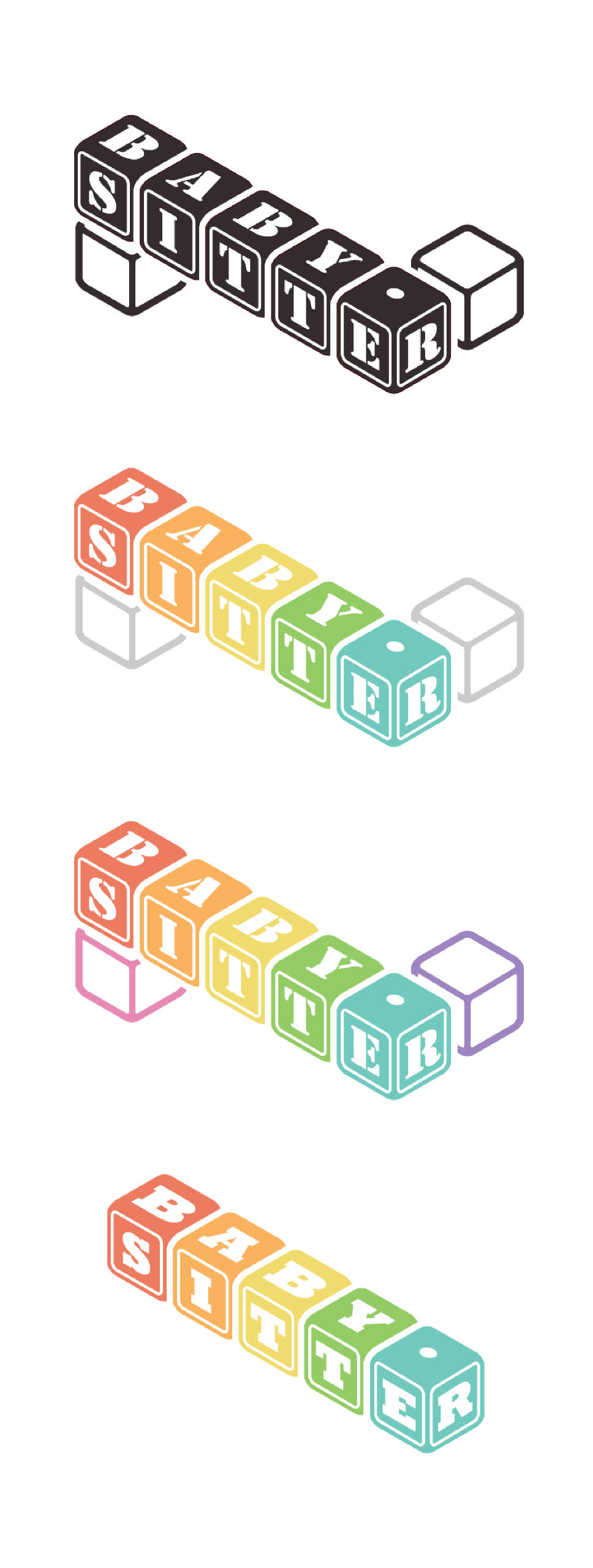
Board Game Logo Design
-
Personal Drawing
-

Alphabet: Oreo Time
-

Face Mappings: Foxy Friends

Writing
-

Manifesto
-

Research Paper
-

Critical Play Report
-

Critical Play Report
-

Critical Play Report
-

Critical Play Report

The Ark
Video Game, 2020 - 2022
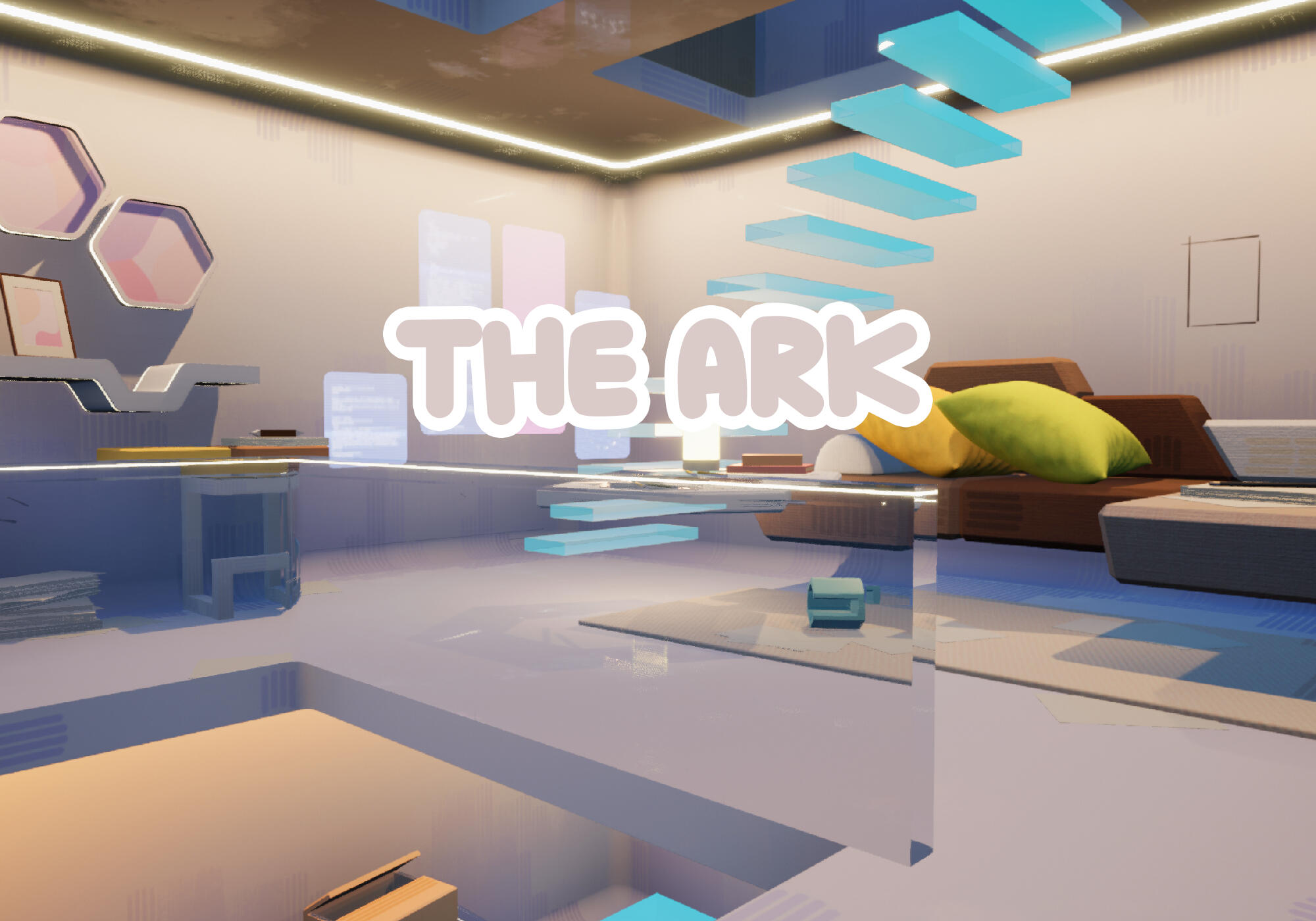
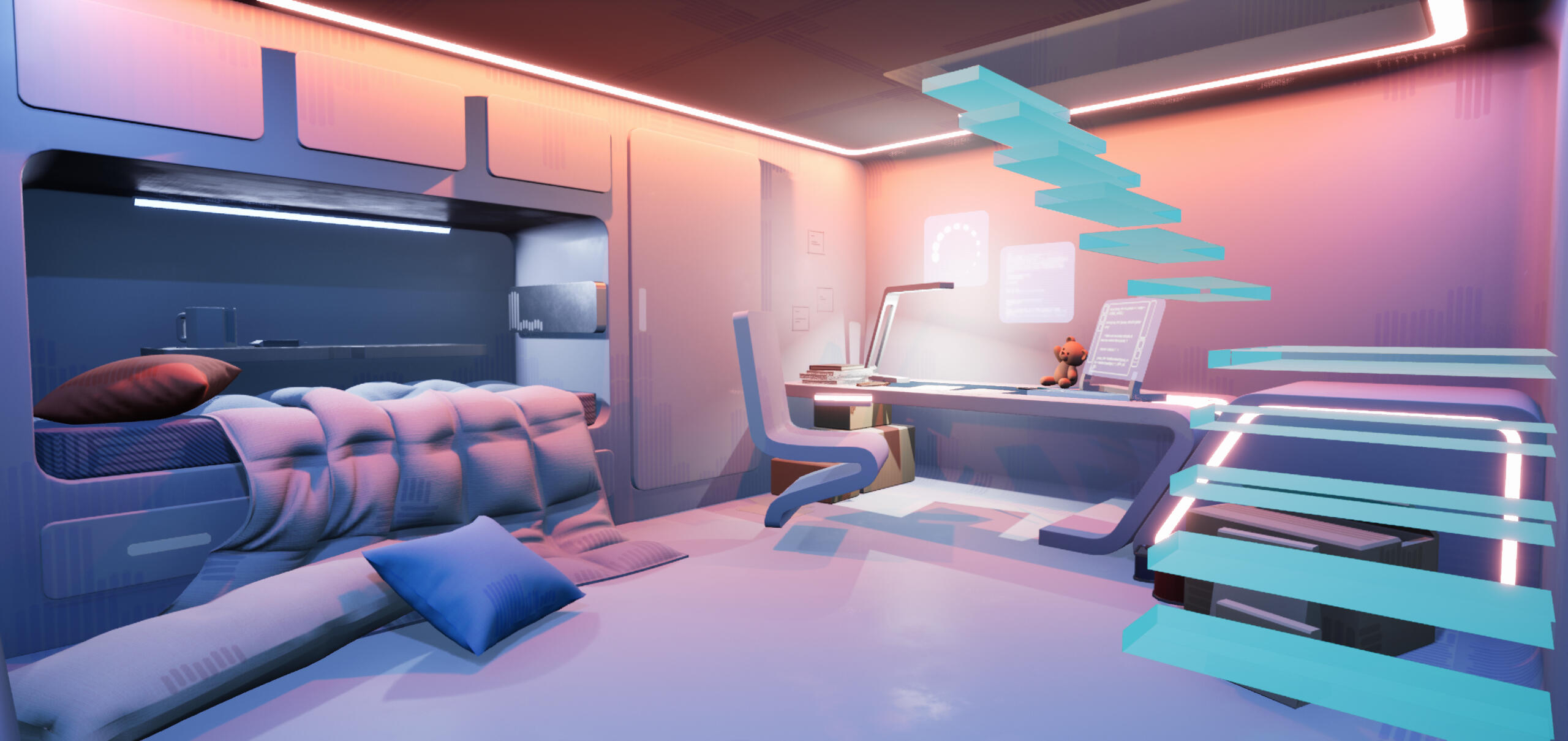
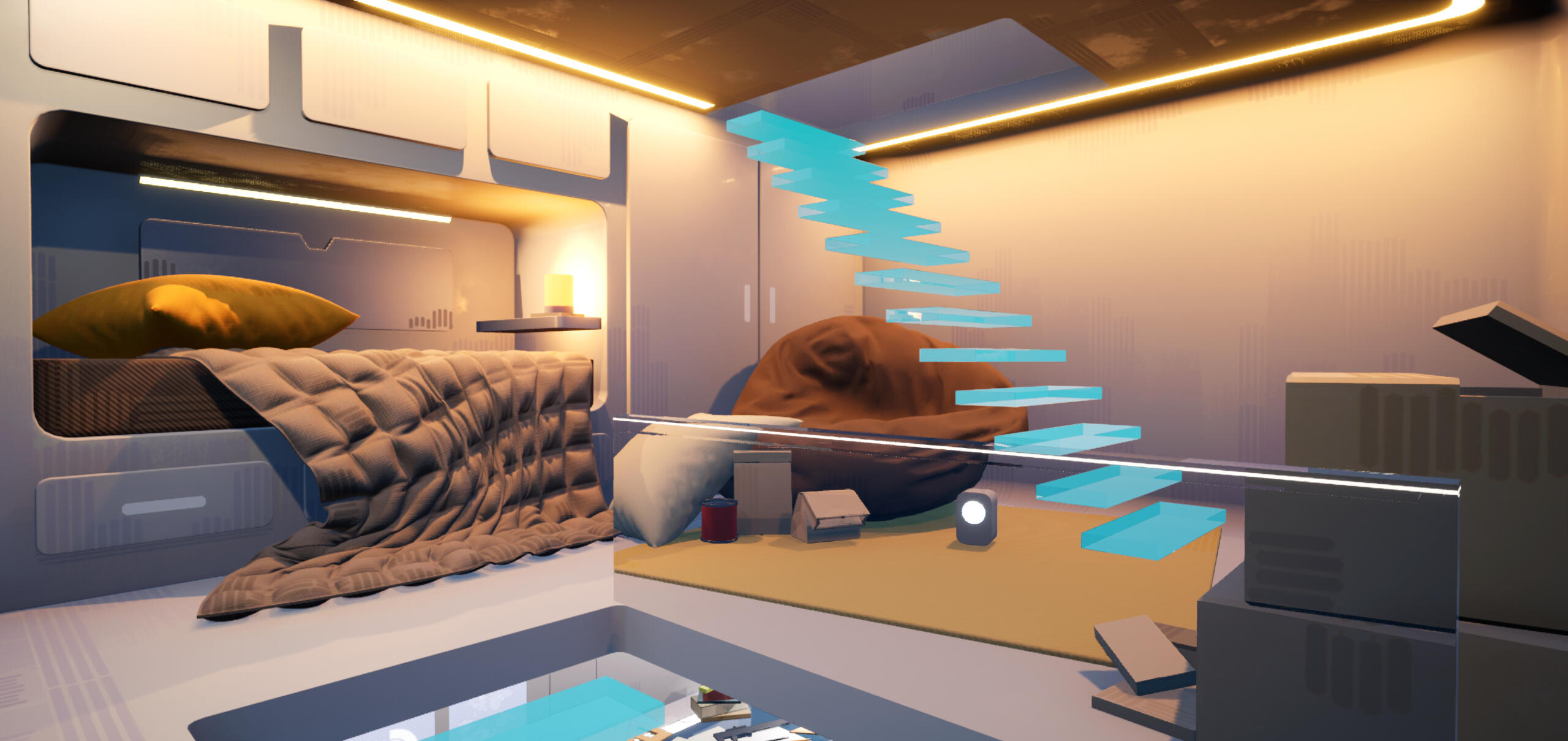
The Ark is a first-person puzzle game with the essence of a walking simulator. Players embody scavengers surviving in a post-apocalyptic world, stumbling upon a forgotten ark. While seeking an exit, they uncover the minutiae within the lost ark, piecing together the relationships, daily lives, and emotions of those who once inhabited it.In the culmination of the game, the player, as the protagonist, carries the core of the ark, stepping into their own future.Game Page
Game Design Document
Demo VideoControl
WASD - Movement
Space - Jump
F - Interact/Pick Up
J - Journal
E - (In Journal) Next Page
Q - (In Journal) Previous PageTools used in creating this game
Adobe Photoshop, Autodesk Maya, Zbrush, Substance Painter,
Unreal Engine, Canva
Design Statement
The Ark is my personal project, representing a comprehensive challenge to my game design and production skills.Through the completion of this endeavor, whether it be the initial stages of conceptualization, prototyping, or the mid-phase involving character design, modeling, texturing, level design, and the later stages of refinement and testing, my game design philosophy and technical skills have taken meaningful strides forward. Simultaneously, this marks my inaugural exploration into the Unreal Engine and its Blueprint system, adding an extra layer of excitement and innovation to the entire process.


White Bird
Video Game, 2023
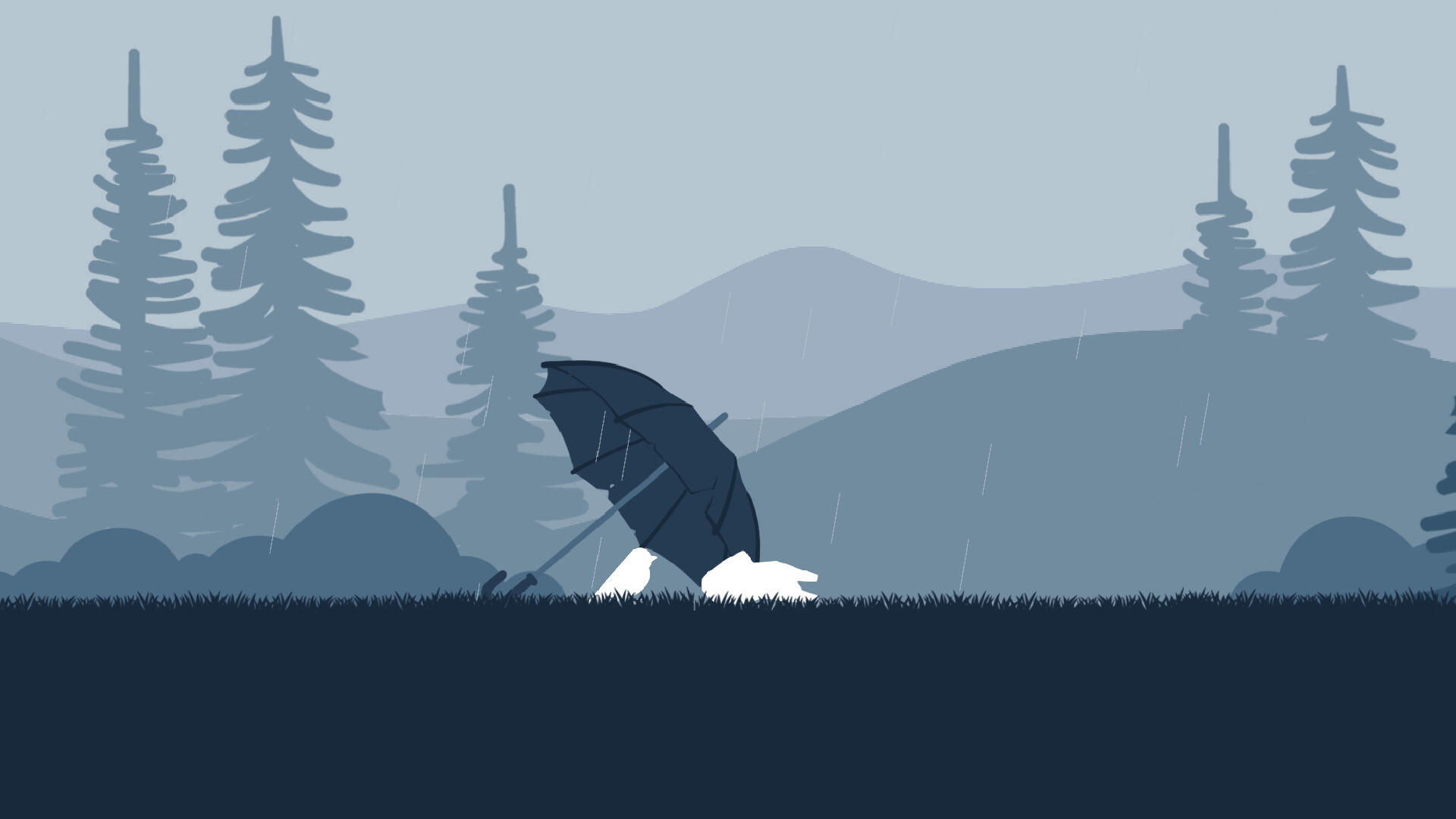
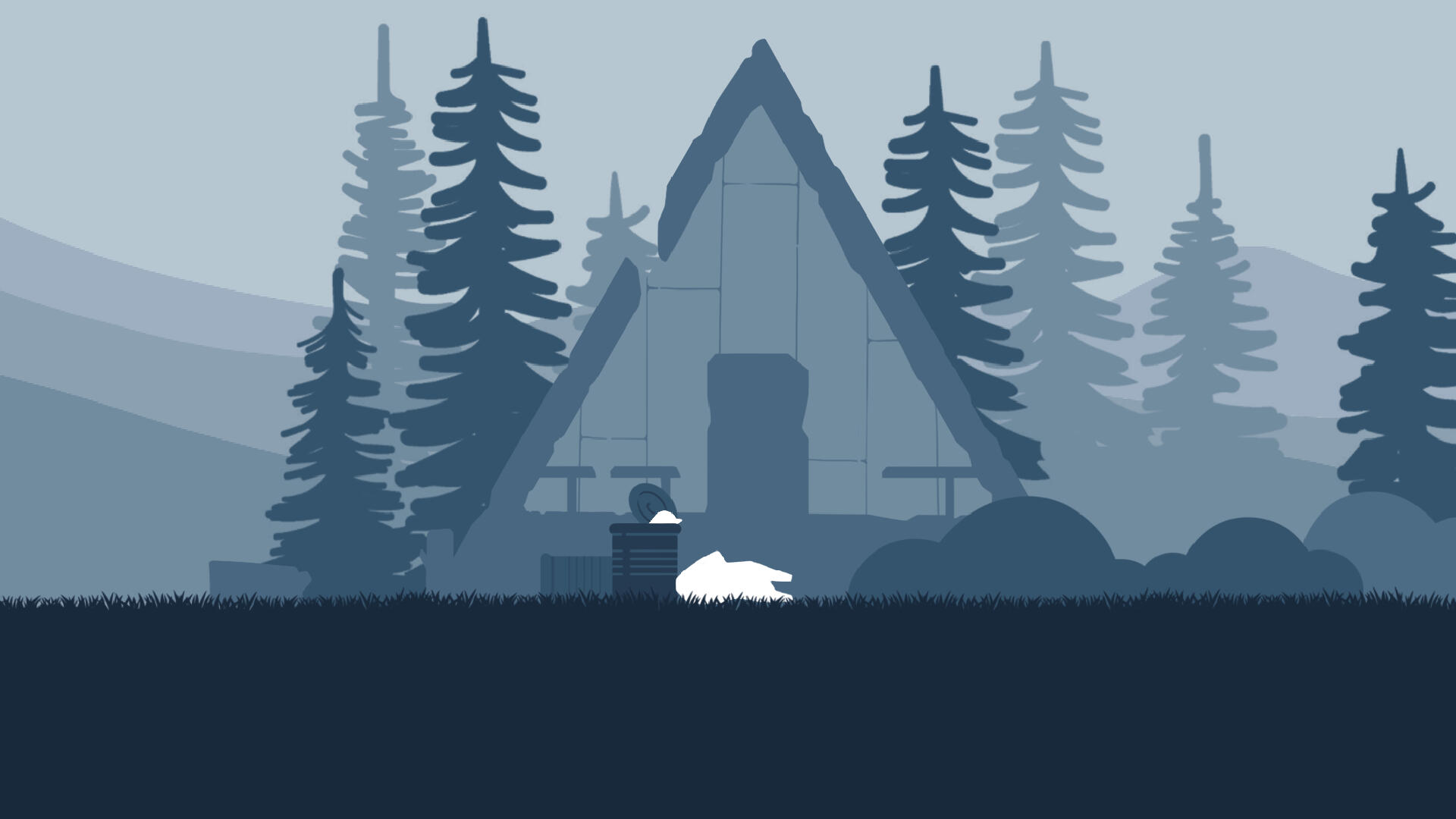
The game, White Bird, is a narrative-driven short game controlled by mouse input. It tells the story of a white bird and a plastic bag, delving into themes of relationships, trust, and life's journey.Perhaps we find ourselves resembling the bird that places its trust in the wrong individuals. Alternatively, we might be akin to a plastic bag, attempting to impact others' lives, only to realize that, ultimately, we are just a disposable plastic bag.Game Page
White Bird
Prototype StoryboardTools used in creating this game
Adobe Photoshop, GameMaker
Design Statement
White Bird is a video game project I independently completed as an academic assignment, a sideways look at my life and a significant exploration of game narrative.The inception of White Bird emerged from a poignant reflection on my experience of betrayal by a friend. Initially conceived, I was both the white bird and the plastic bag. As the bird, I believed I had found camaraderie, a kindred spirit in this harsh world. Conversely, as the bag, I thought I finally possessed value, and could offer solace to the soul facing loneliness.Therefore, this brief companionship, my unresolved emotions, along with the fleeting moment of contemplation, found expression in the tangible medium of the game. Is the white bird, when left on the ground, also an abandoned plastic bag? And when the plastic bag soars through the air, is it, too, a free white bird?
Wander
Video Game, 2023
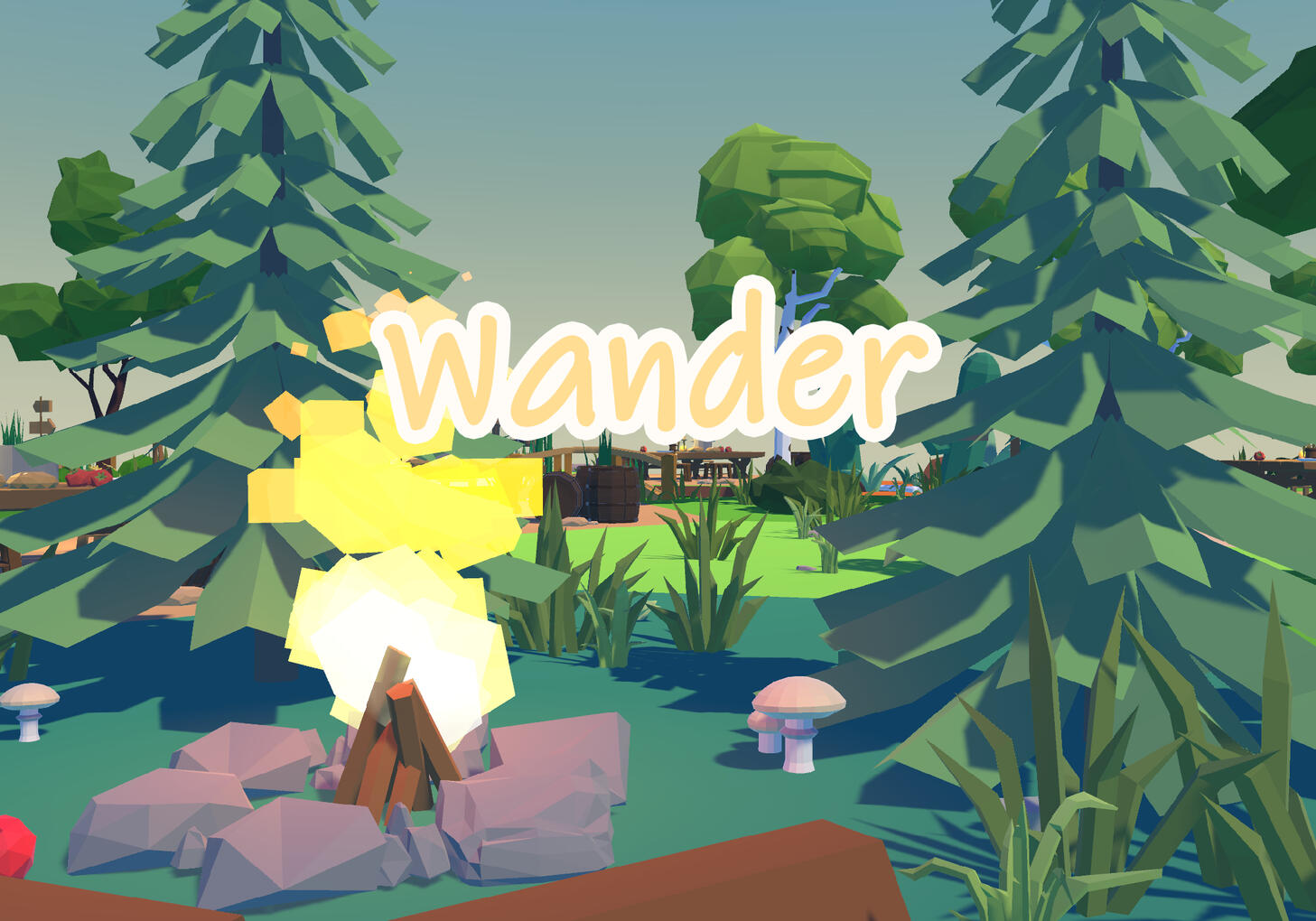
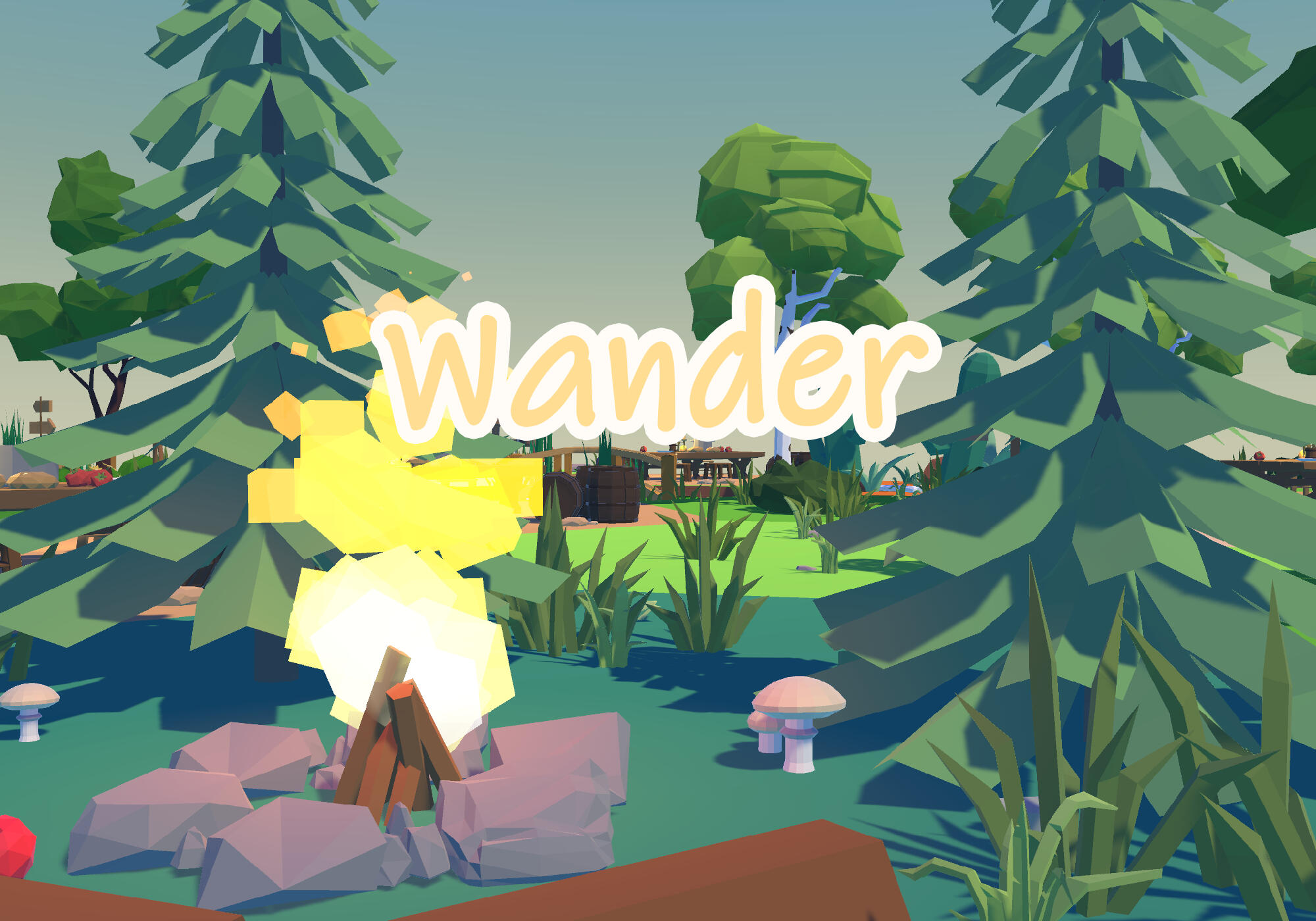
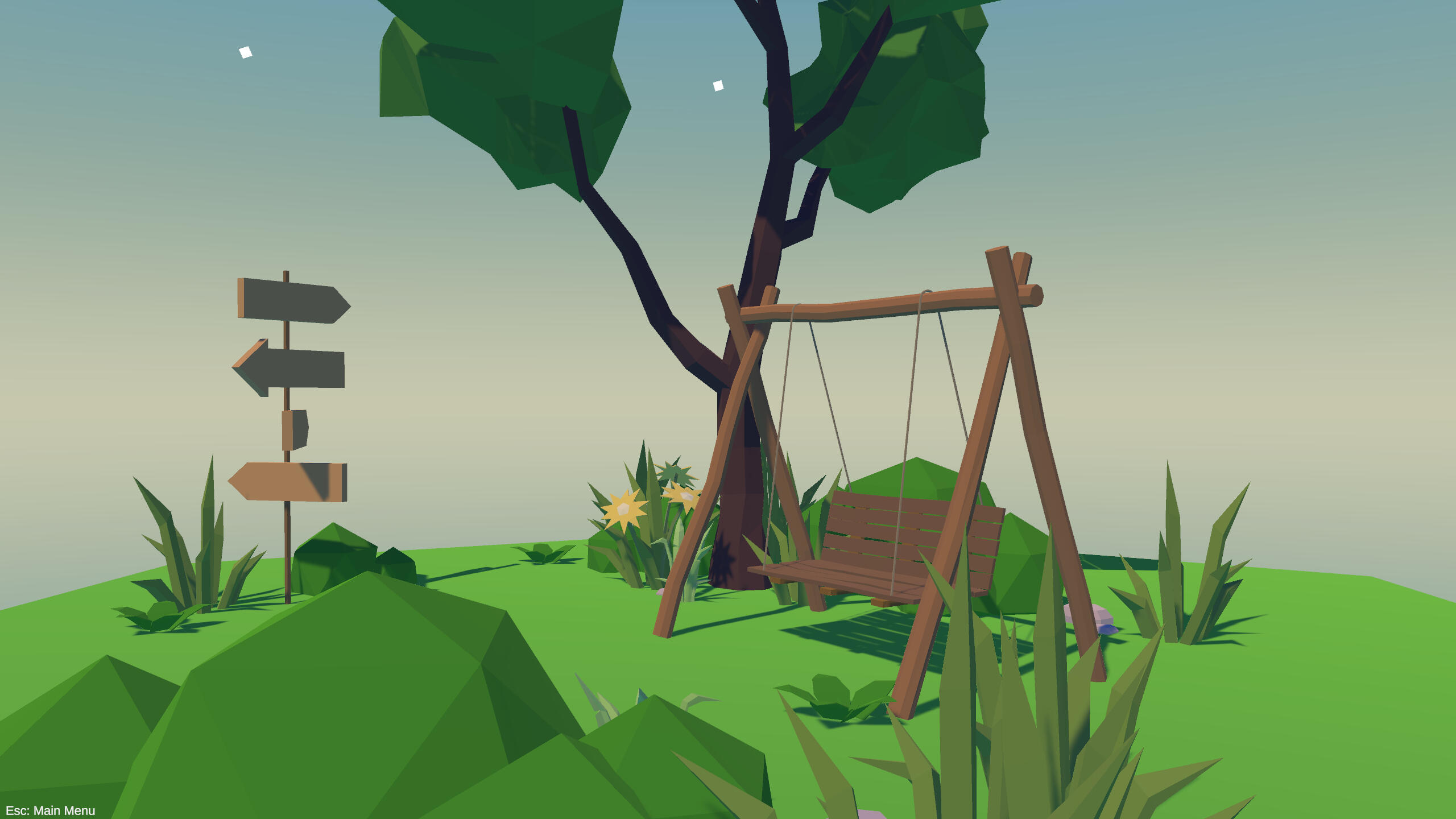
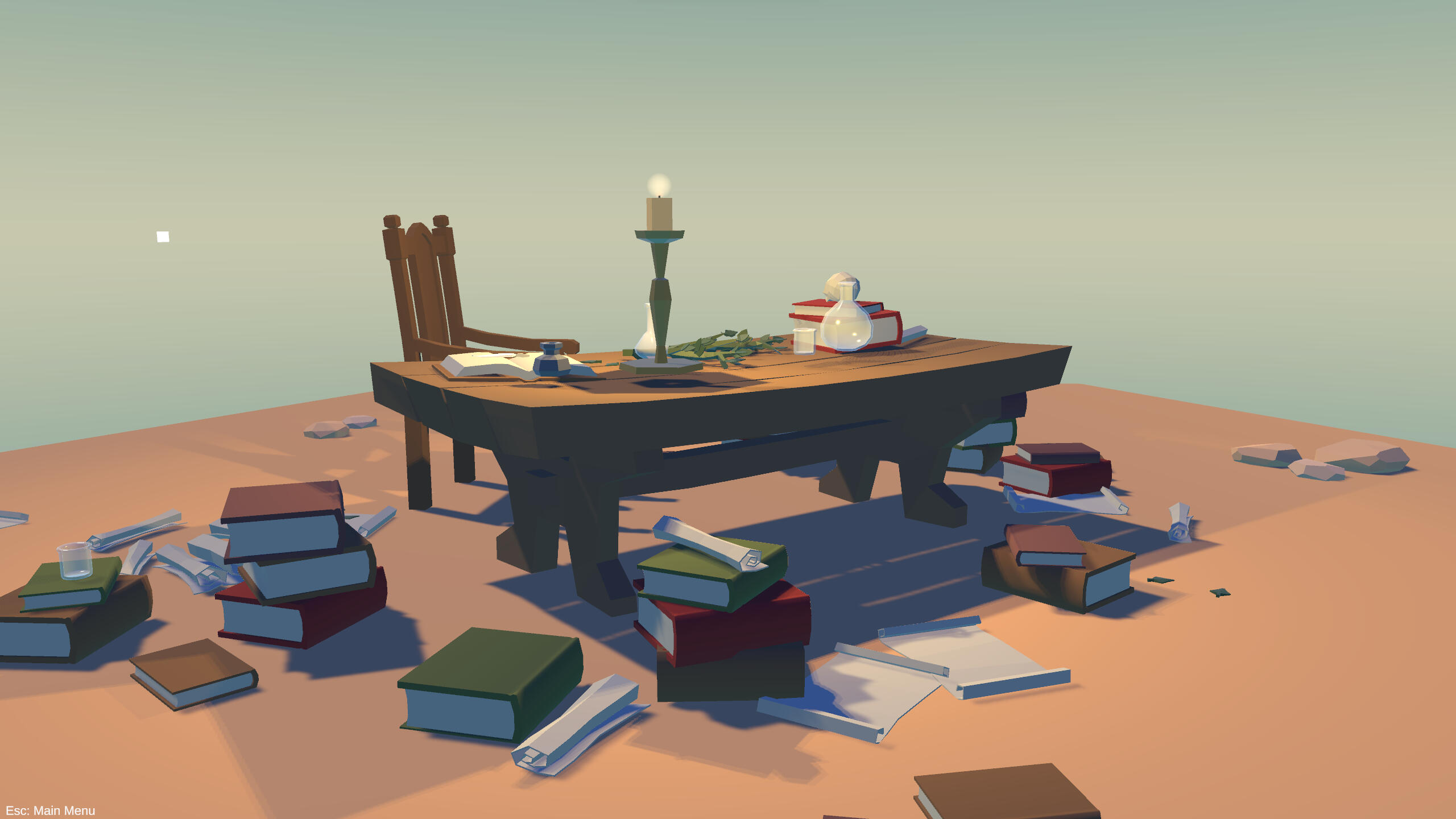
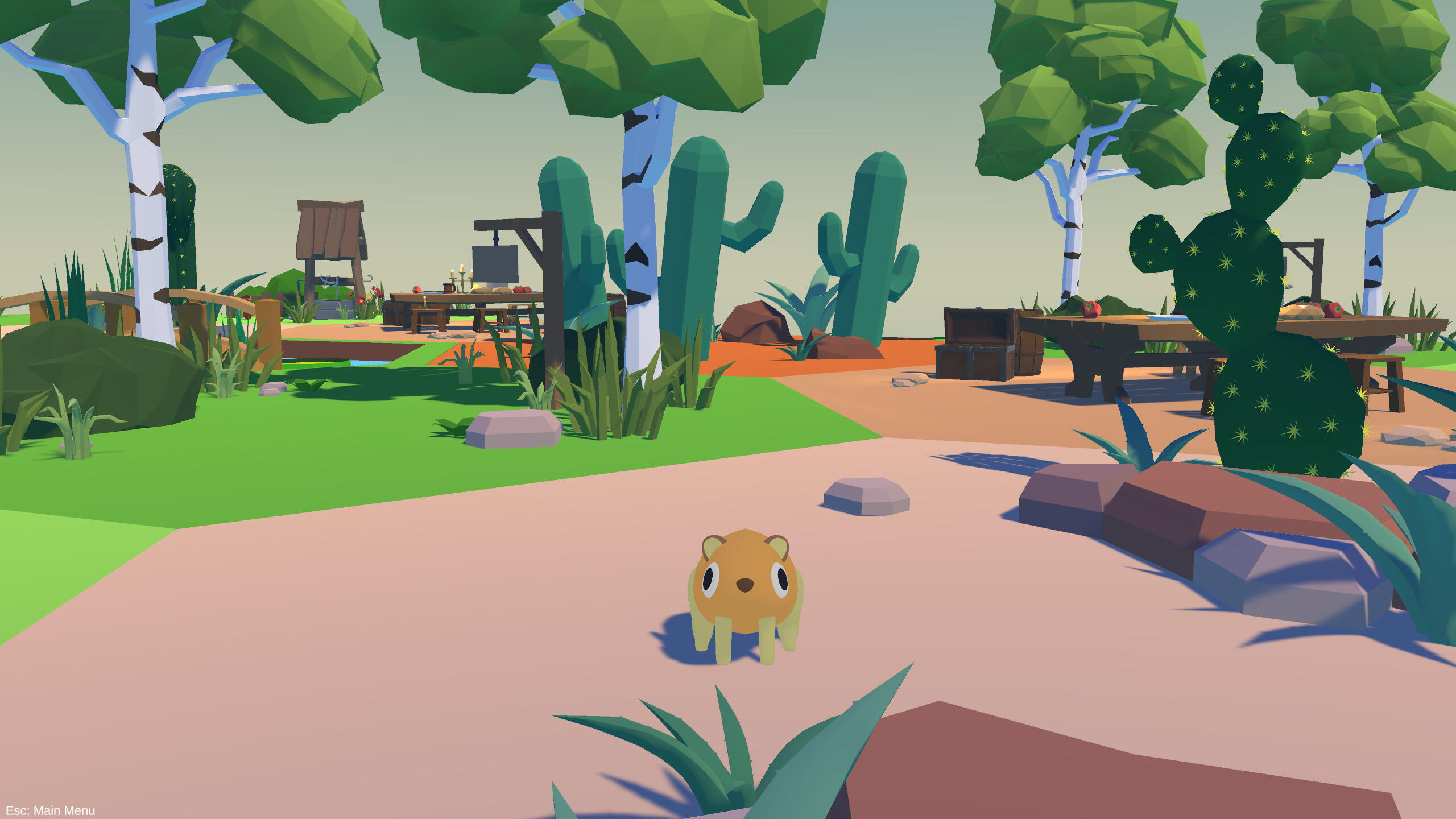
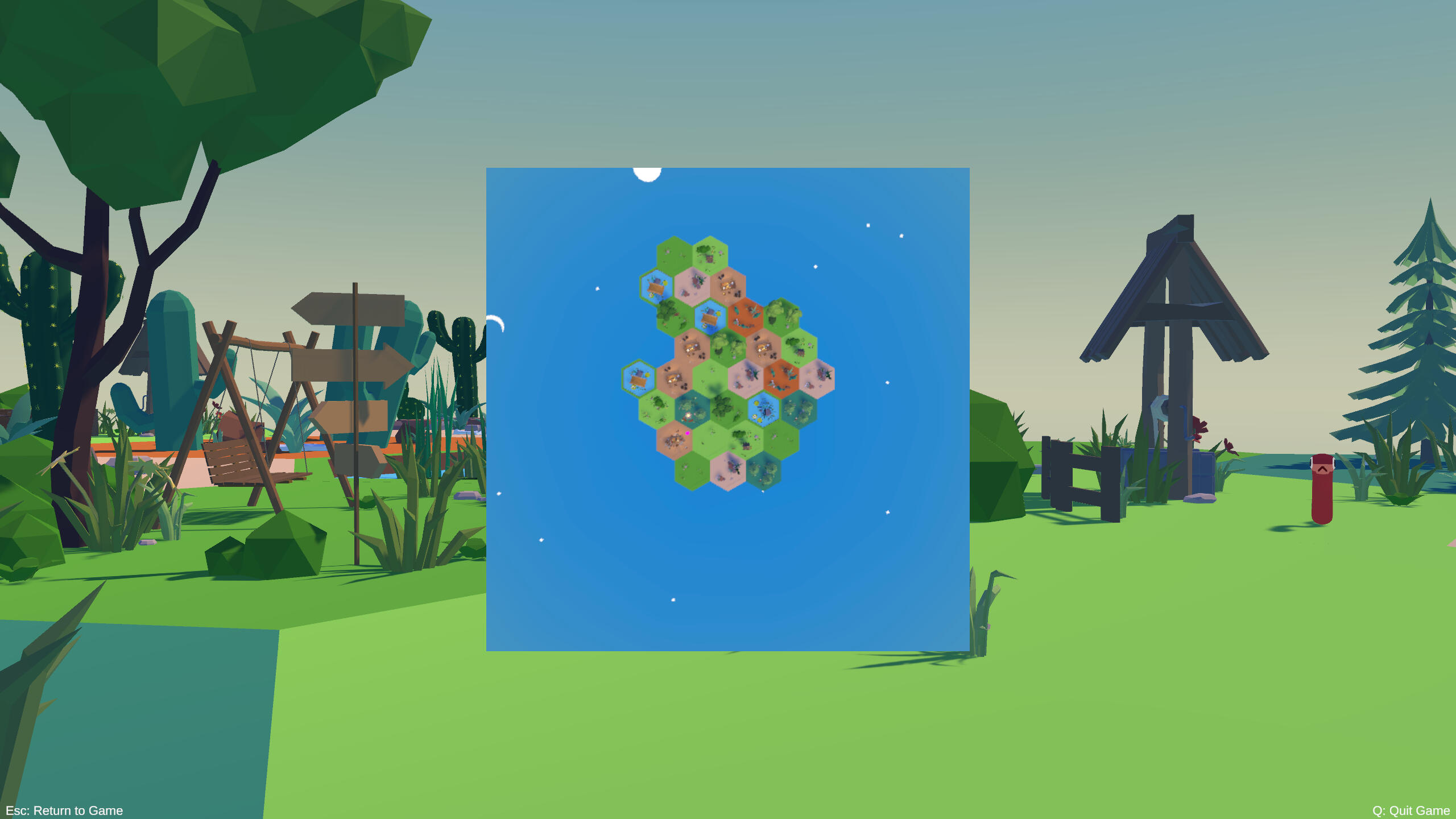
As a walking simulator game, Wander aims to provide players with a tranquil and soothing gaming experience, letting them unwind and relax.In this game, players aren't burdened with specific tasks or objectives. Instead, they are encouraged to wander through a world composed of hexagonal blocks, and possibly stumble upon delightful surprises along the way.Game Page
WanderTools used in creating this game
Autodesk Maya, Unity Engine
Design Statement
As an academic assignment, Wander, the walking simulator, utilized controller, models, and VFX from free resources on Unity Asset Store. Responsible for the game's concept, gameplay design, level and environment creation, as well as programming, I navigated the entire production process within the Unity engine.With its distinctive "generate terrain" game mechanism, Wander posed a series of challenging programming hurdles throughout its development. Overcoming these challenges involved a lot of caffeine, sleepless nights, and iterations. Yet, I take pride in gradually unraveling these complexities. After all, being a game designer is essentially being a problem solver.
Delivery
Video Game, 2023
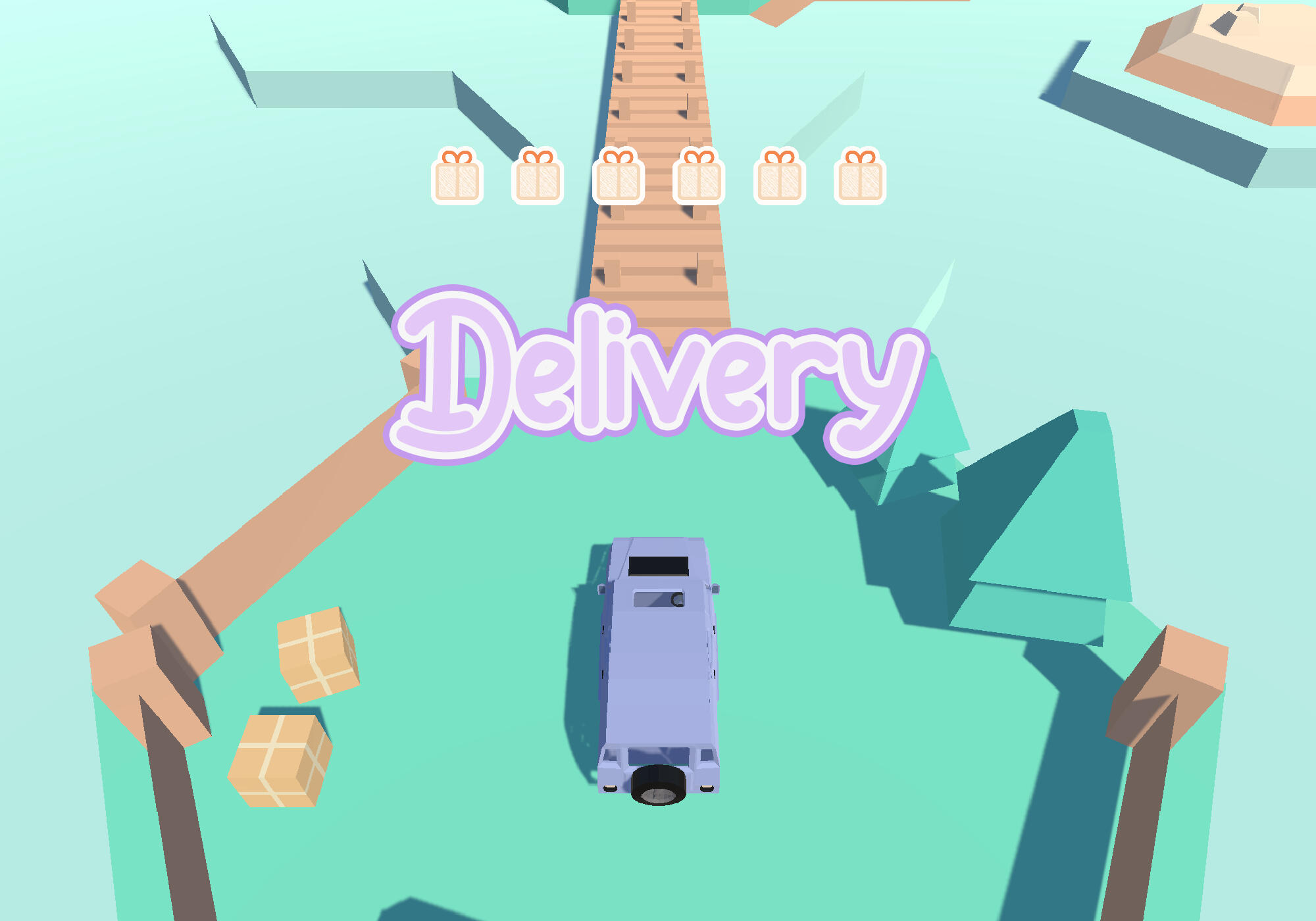
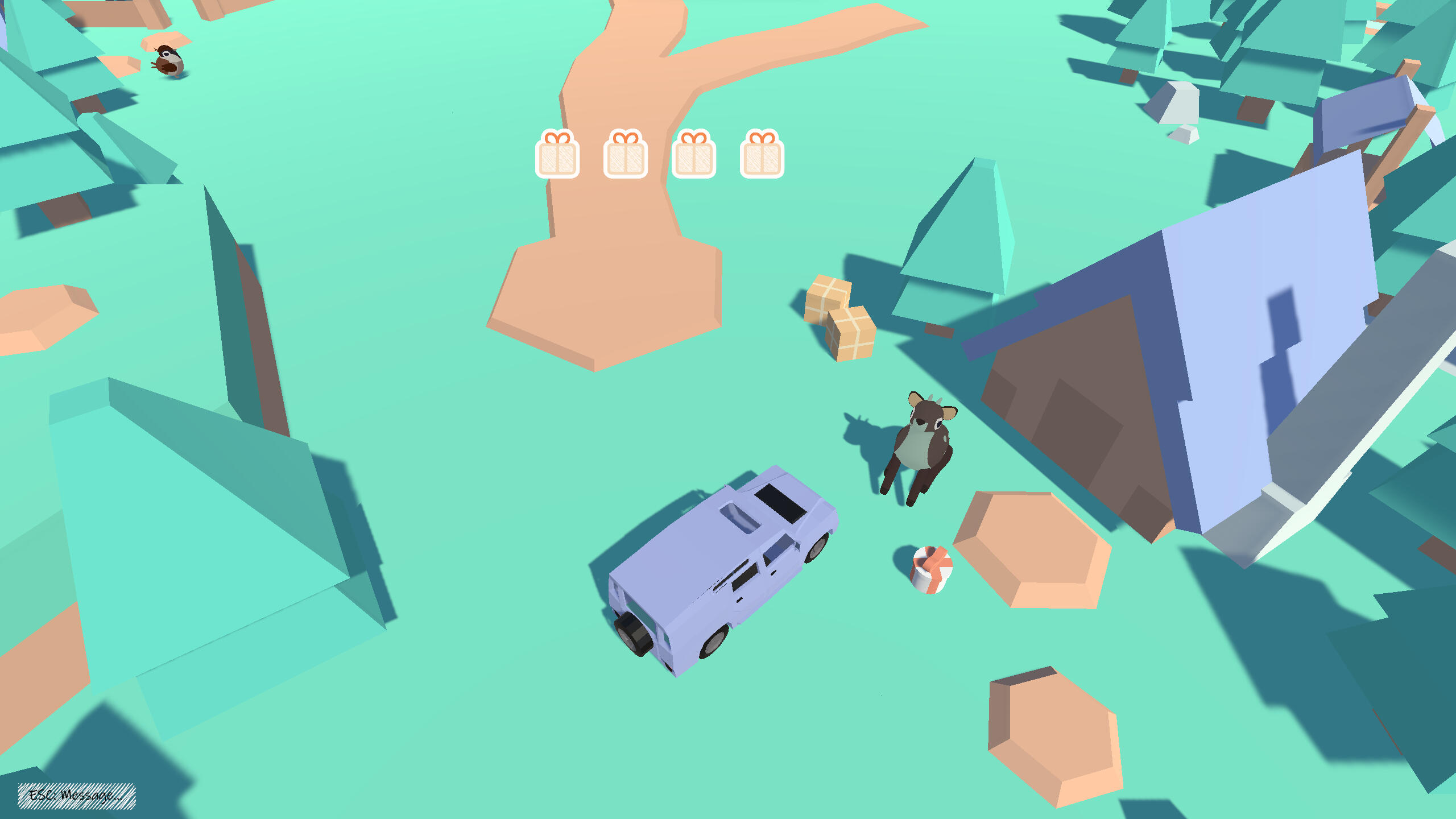
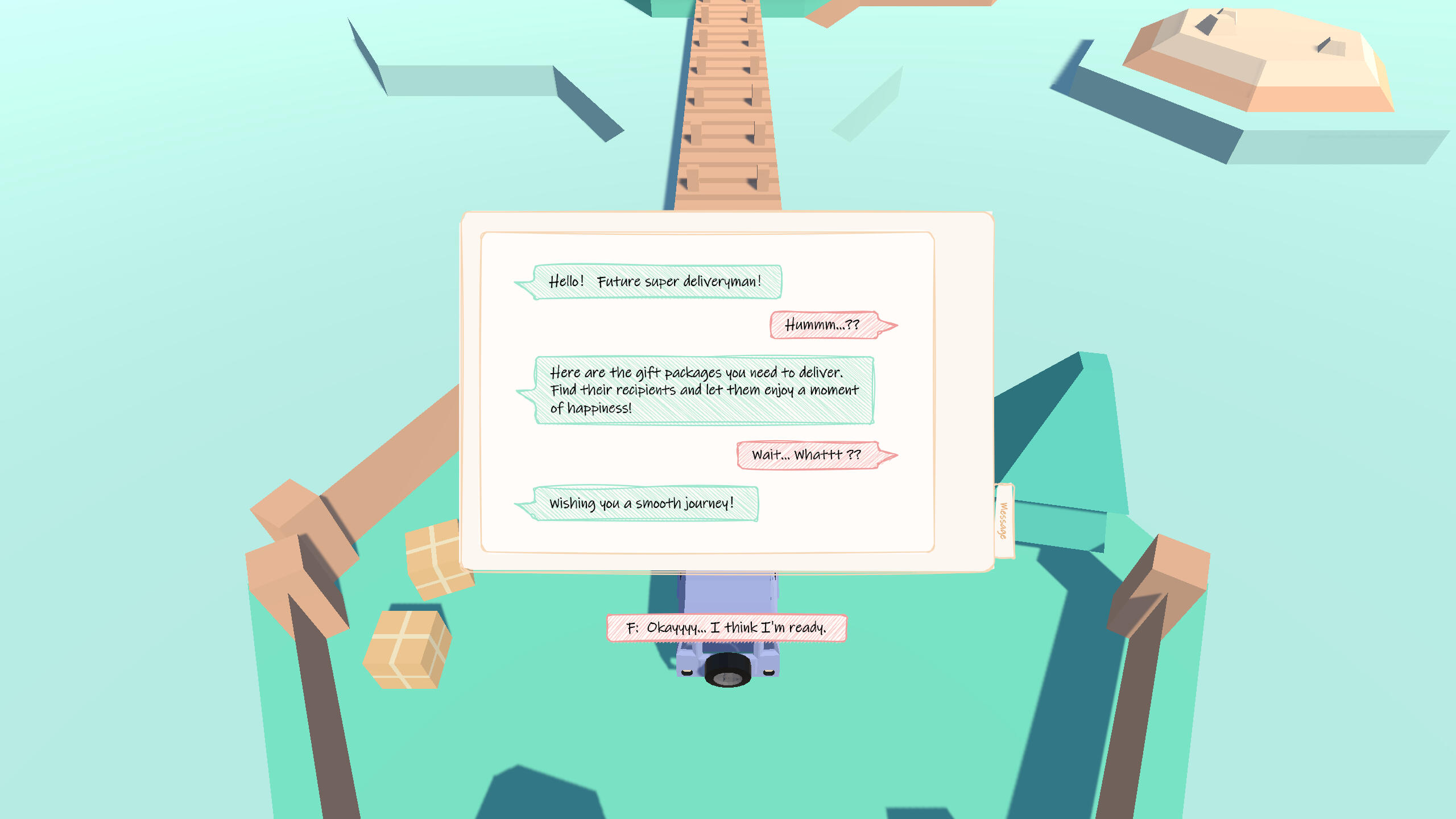
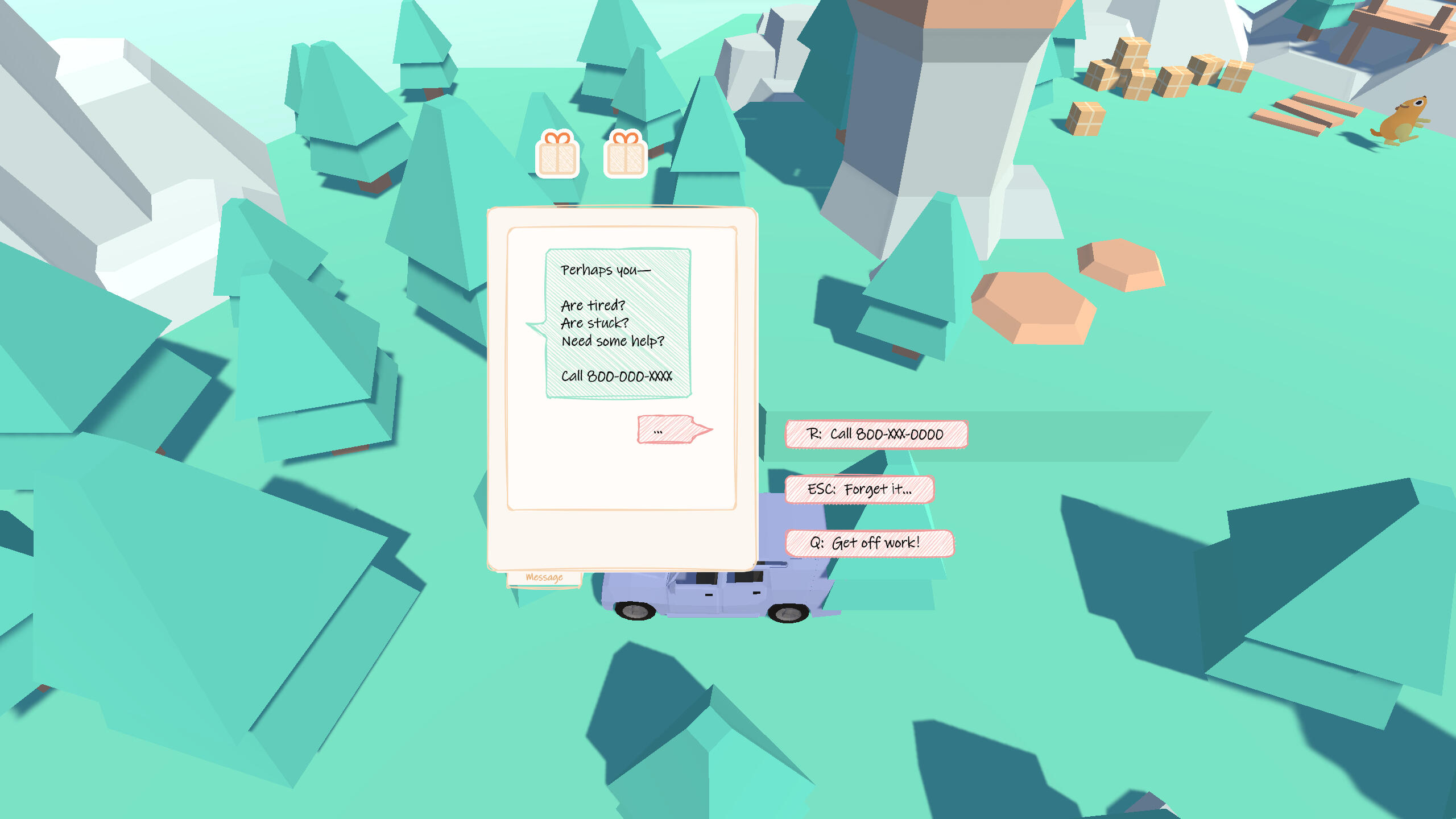
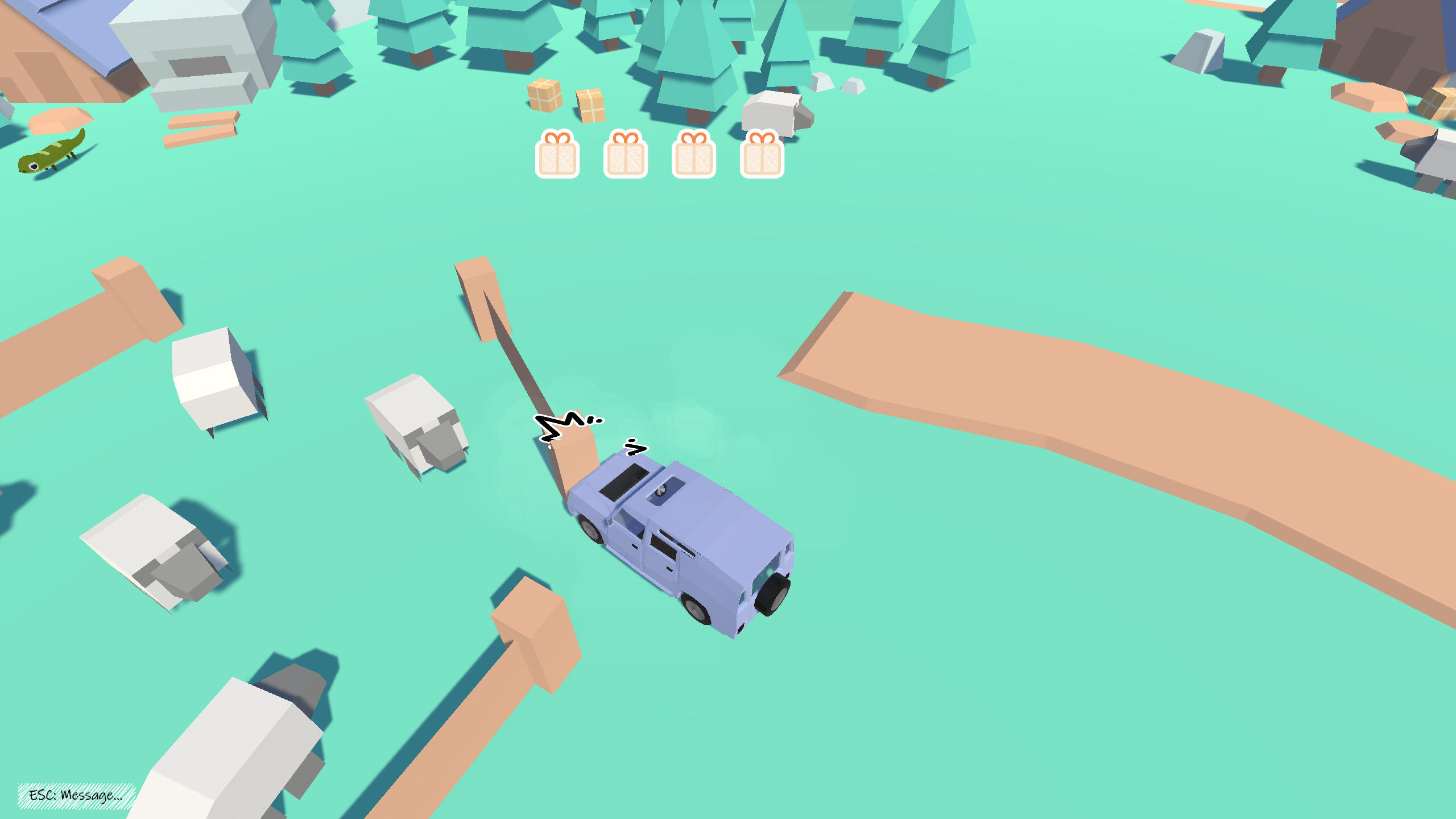
Delivery is a game where players take on the role of a delivery driver, operating a truck to deliver gifts across a small island while enjoying the reactions of adorable animals receiving these presents.In addition to its relaxed gameplay style and cozy atmosphere, one of the fun things about the game is the more physically realistic driving experience, and with this controller to play around with the environment and surroundings.Game Page
DeliveryTools used in creating this game
Autodesk Maya, Draw.io, Unity Engine
Design Statement
Delivery, conceived as my personal project for an academic assignment, features models and skeletal animations derived from Kenney Assets and Unity Asset Store. I personally designed the game's concept, gameplay, and levels, and completed the entire game, including the programming process, within the Unity engine.For me, Delivery is not only a practical exercise in Unity programming but also a fresh exploration of Unity's physics simulation system, including Collision, Rigidbody, Physical Materials, etc. Simultaneously, this project served as my initial foray into user interface design, utilizing Draw.io as a tool for preliminary experimentation.
Pumpkinville
Video Game, 2023
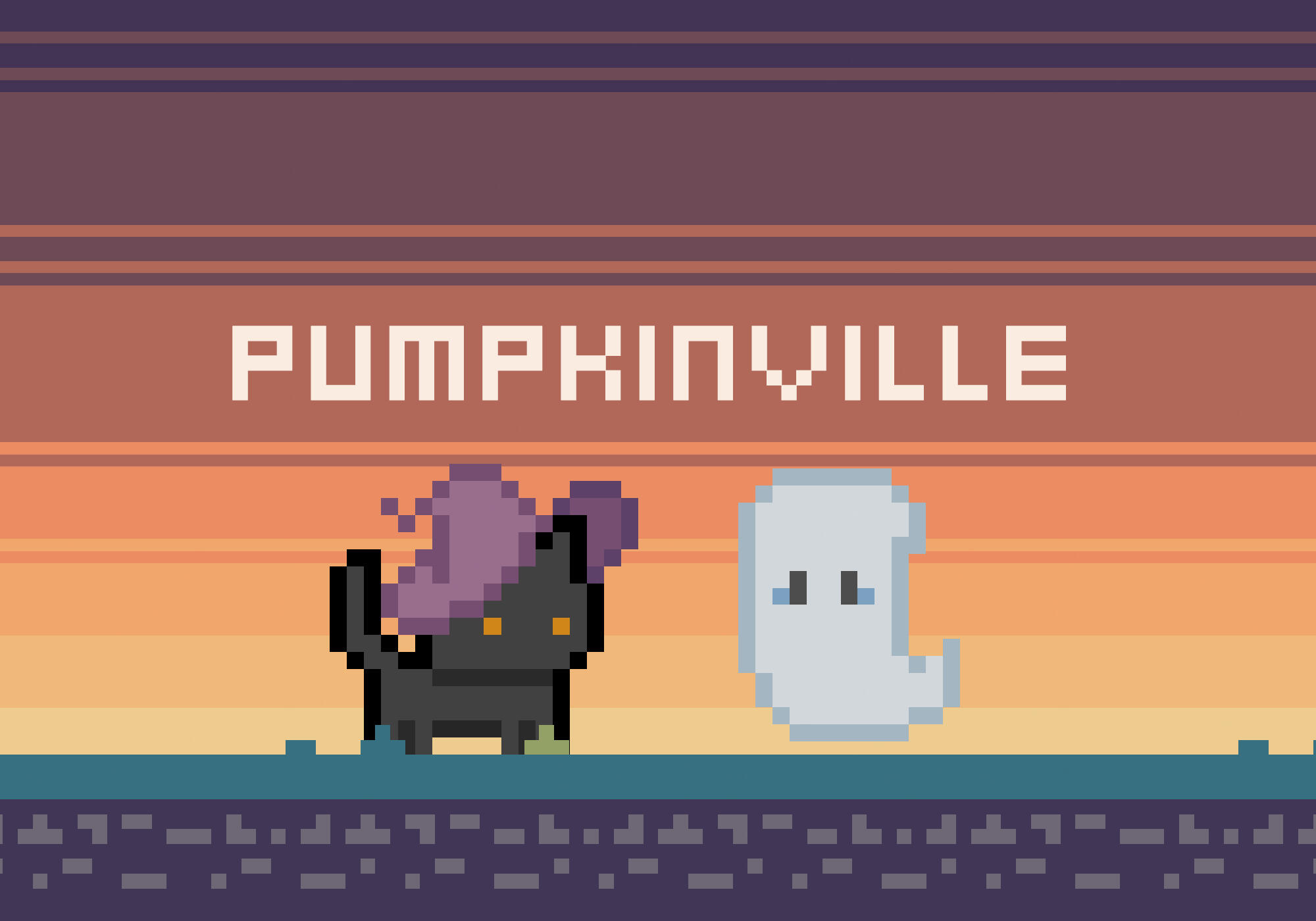
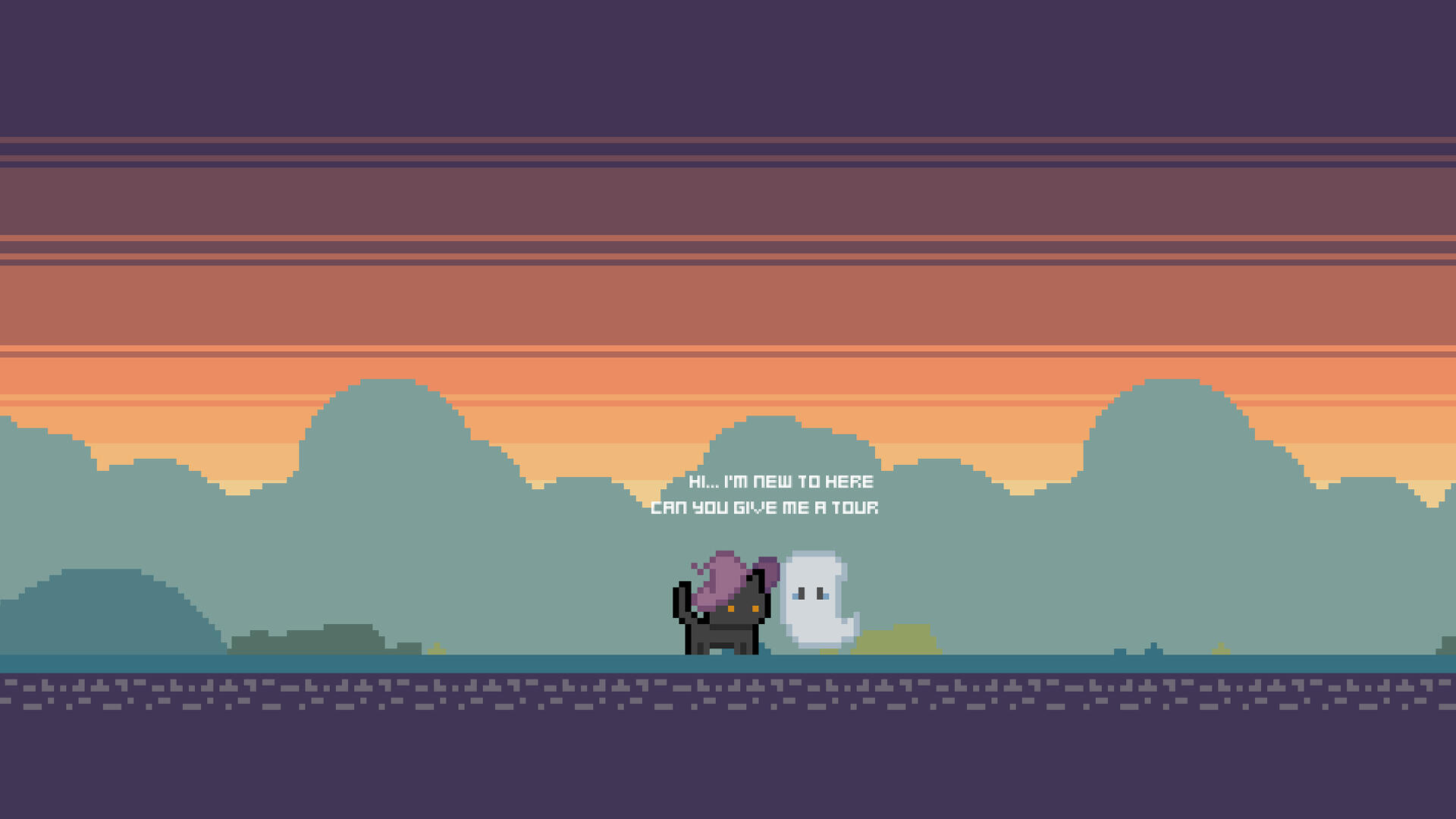
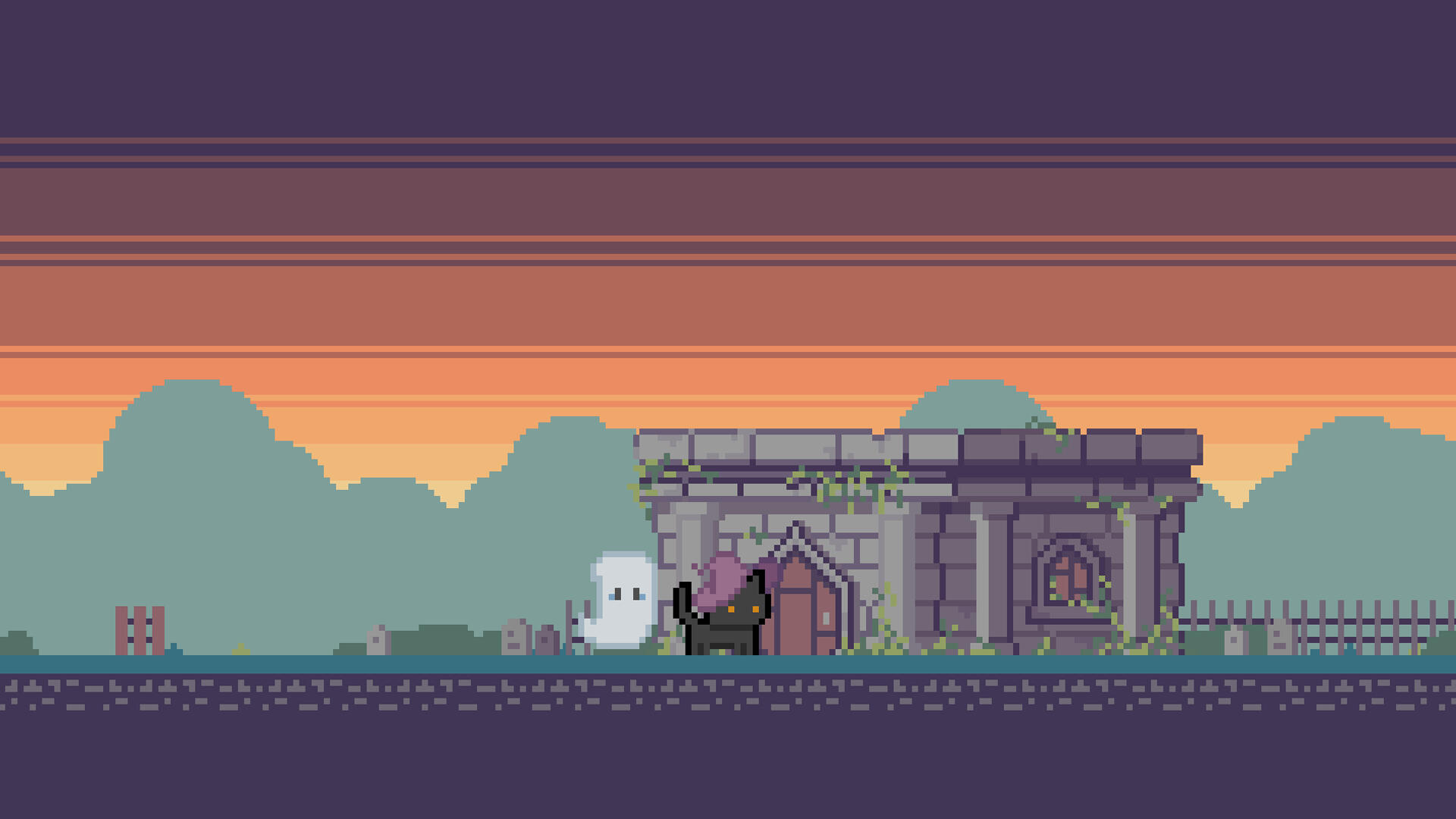
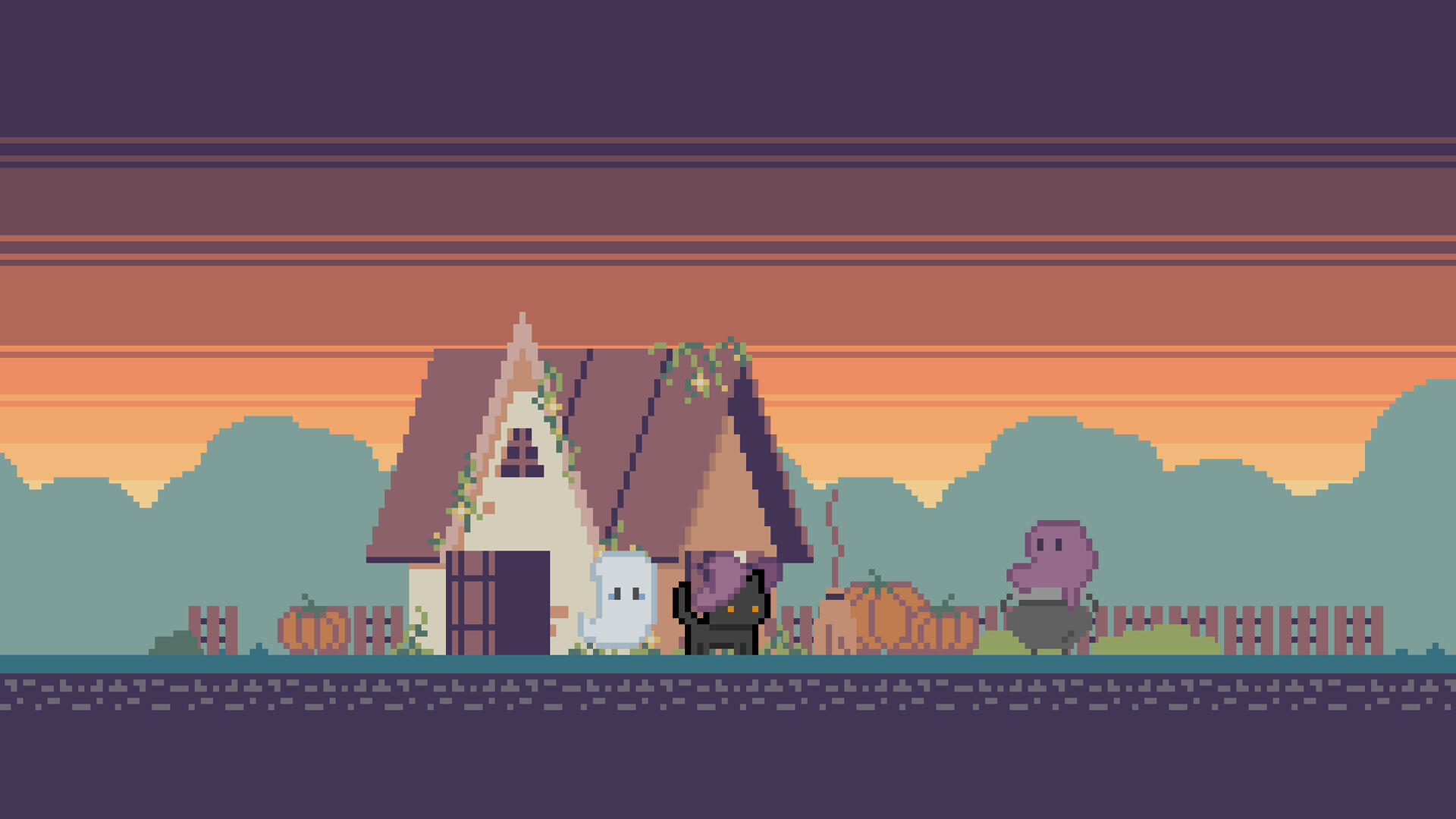
Pumpkinville is a simple pixel-art 2D flat game narrating a black cat witch's encounter with a little ghost in Pumpkinville.Players take on the role of the black cat witch, who guides the newly arrived little ghost on a tour of the village. Together, they explore the town, allowing the ghost to familiarize itself with the surroundings and introducing it to the neighbors.Game Page
PumpkinvilleTools used in creating this game
Pixelmash, Adobe Photoshop, GameMaker
Design Statement
As my academic assignment and my initial venture into developing a pixel-style game using the GameMaker engine, Pumpkinville posed a multifaceted challenge for me.Despite its simple flat game structure, Pumpkinville demanded considerable effort on my part. It marked my inaugural attempt with the GameMaker engine and the first instance of integrating my passion for pixel art, traditionally a personal hobby, into practical game development.As an interactive medium, distinct from static drawing, games require particular attention to maintaining consistent pixel sizes for characters, backgrounds, and all the scene elements for uniformity and harmony of the game's art style.
Garden Galaxies
Video Game Proposal, 2023
Garden Galaxies is a tranquil 2.5D role-playing game that seamlessly blends farming simulation gameplay with delightful adventurous and mysterious magical elements.Envision a world where magic and nature collide. In this game, you cultivate and crossbreed plants, gathering their fruits. Interacting with various characters, you'll employ your botanical knowledge and imagination to fulfill their wishes. Moreover, you can journey across diverse worlds to discover new materials and rare seeds. It's a unique blend of farming, potion exploration, and relaxing adventure, all encapsulated within a single game.Game Page
Game Design DocumentTools used in creating this project
Adobe Photoshop, Draw.io
Design Statement
Crafting a cozy game that integrates farm simulation, flora and fauna hybridization, and potion crafting has been a long-standing idea of mine. The Garden Galaxies' game design document marks the first step toward realizing this concept.Progressing from an abstract, singular idea to a tangible, comprehensive, and executable GDD is both exhilarating and an ongoing process of filling gaps and refining details. It is akin to composing a song. Initially, there's only a vague, immature melody—a blurry game concept. As development unfolds, the game progresses designs for gameplay, mechanics, characters, and environmental elements, like a song gaining its necessary beats and chords.In the future, this game design document will serve as a guiding document, ultimately leading to the creation of a truly playable video game.

Treasure Hunt: Island
Board Game, 2020 - 2022
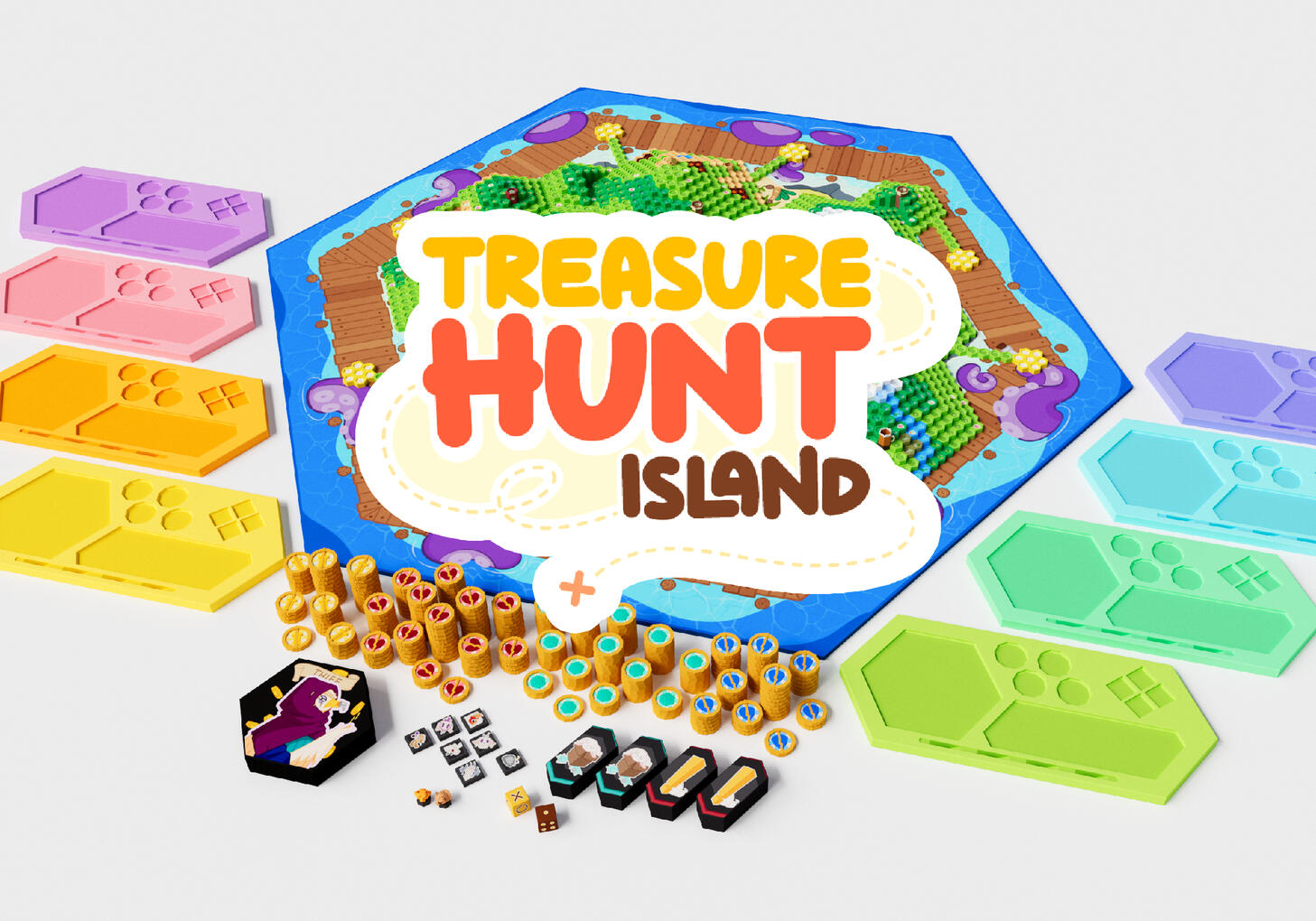
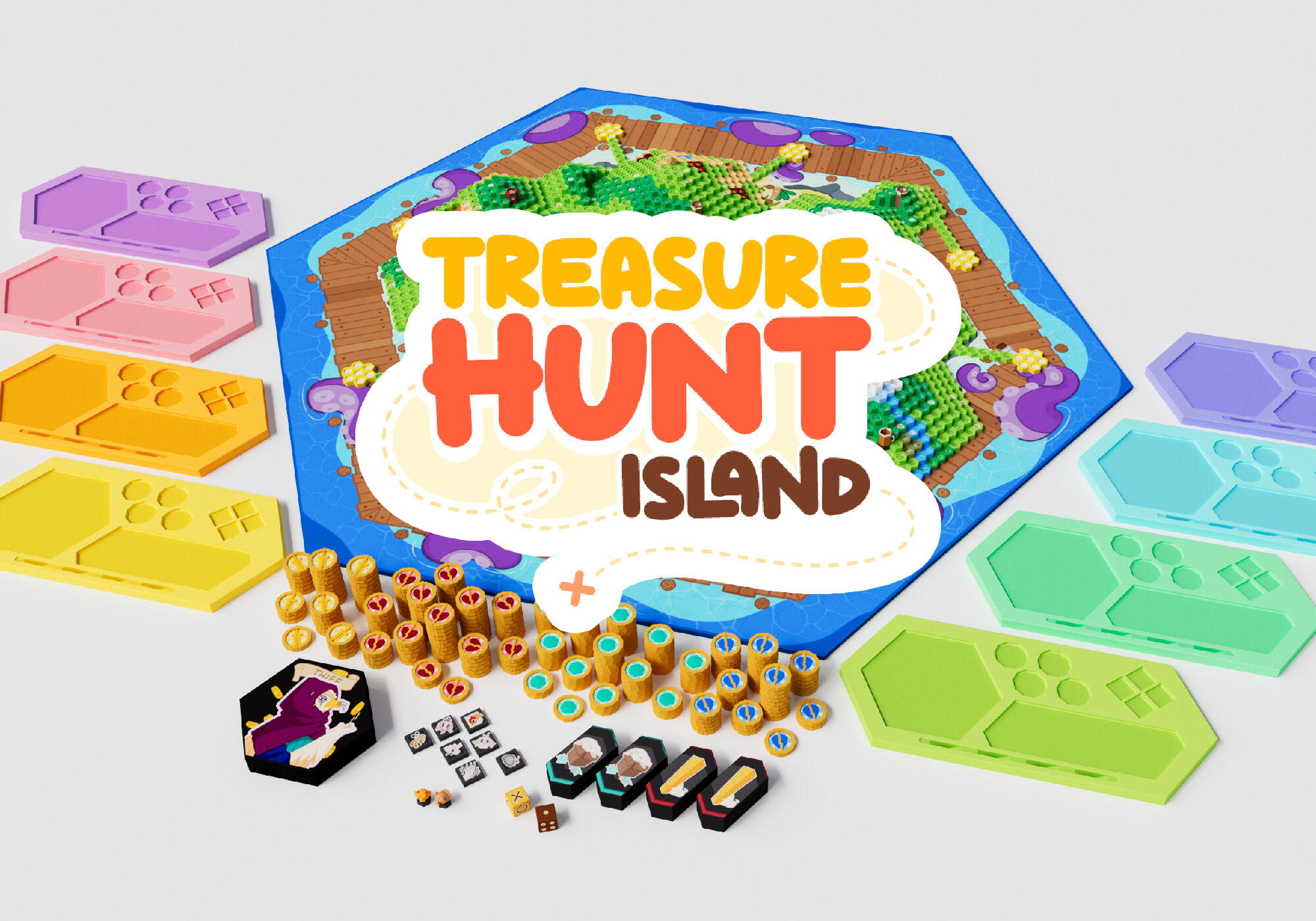
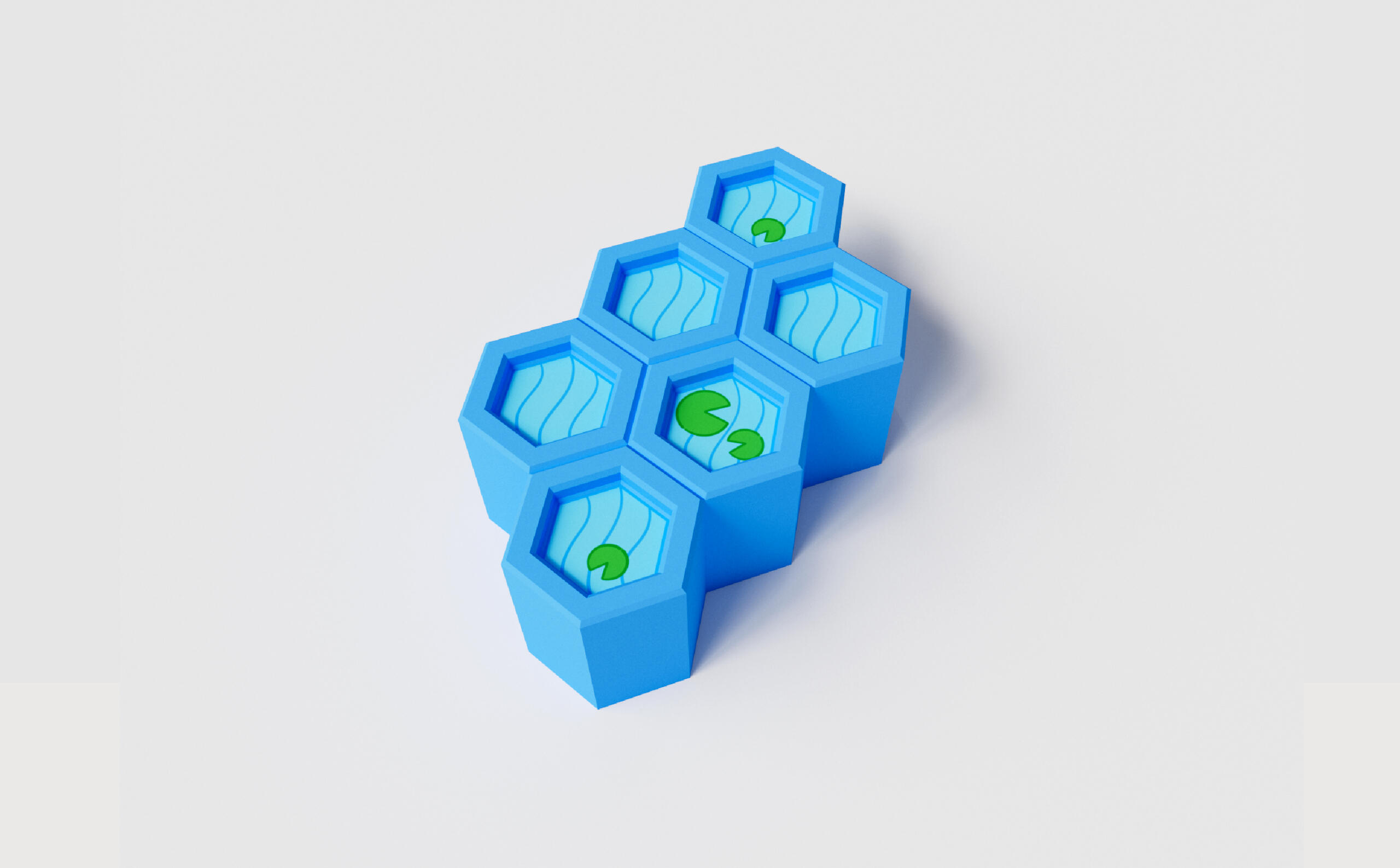
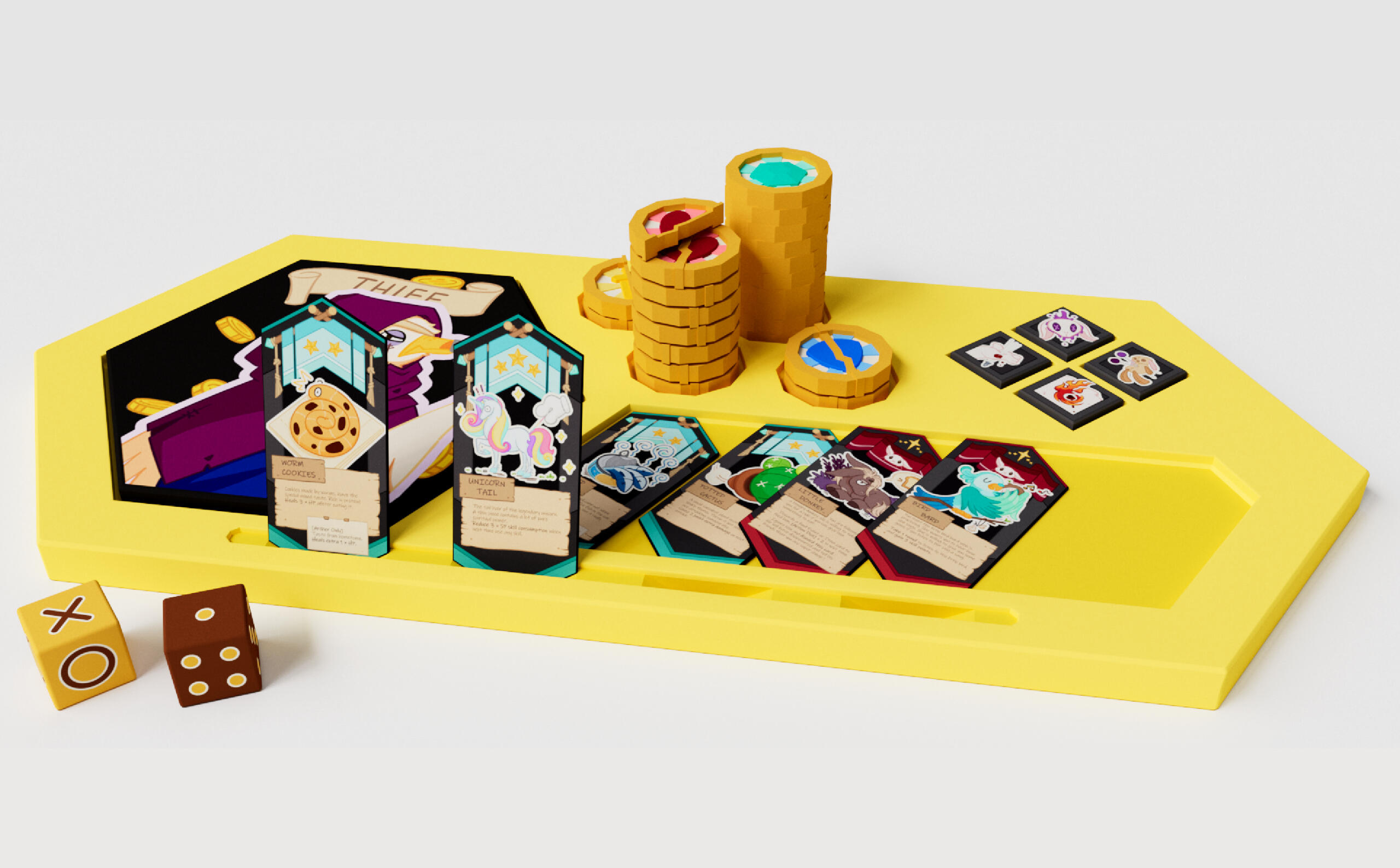
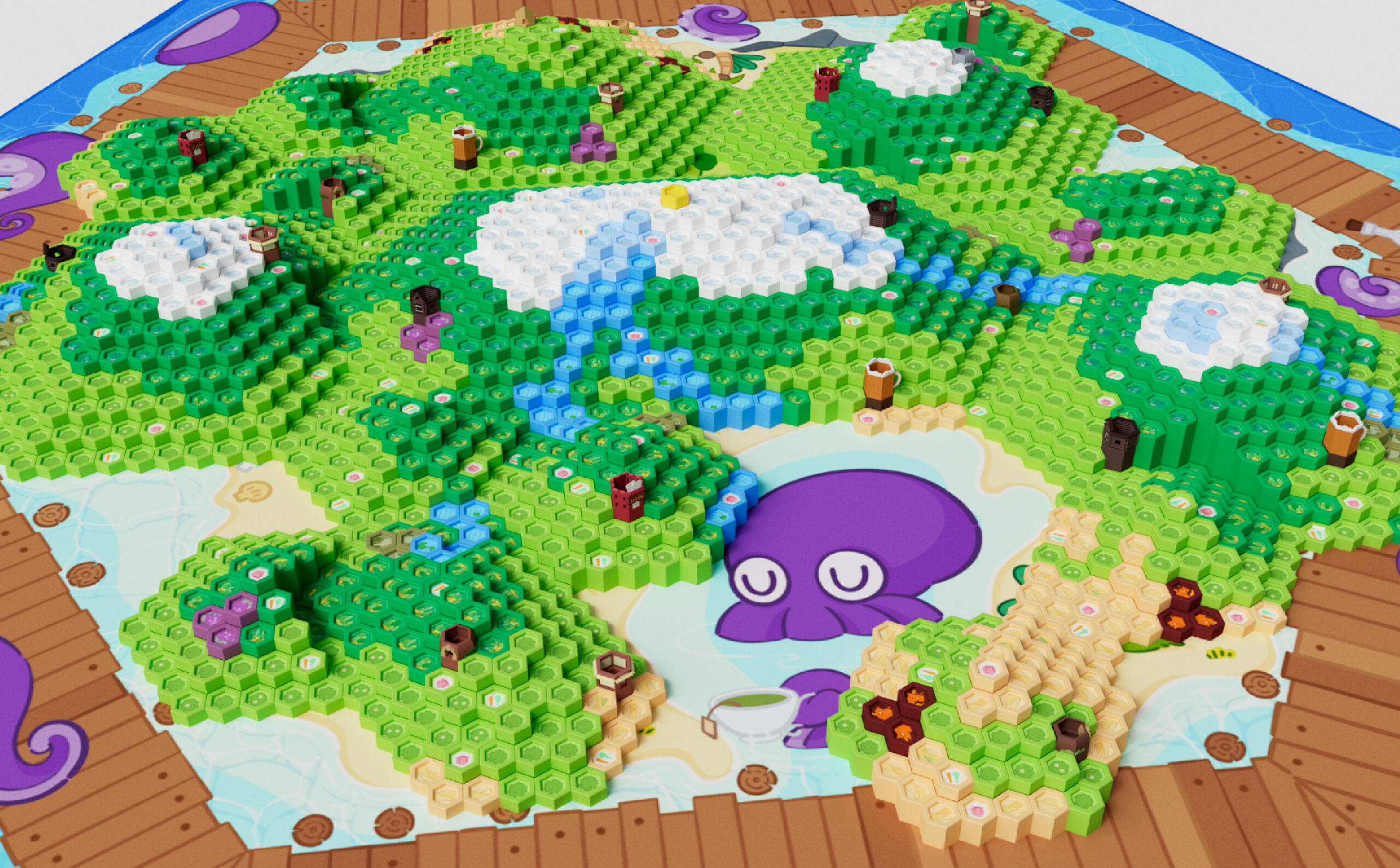
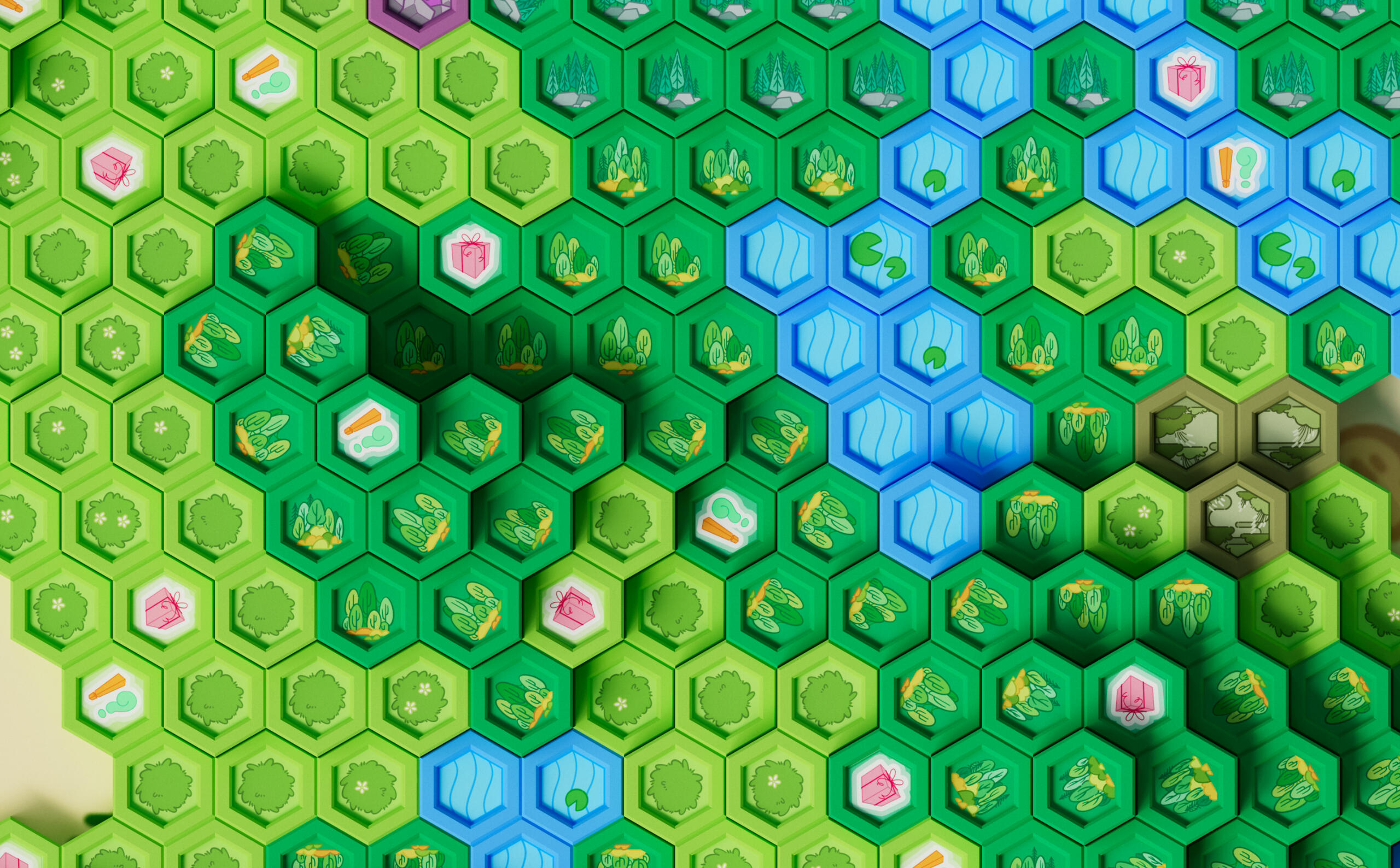
Treasure Hunt: Island is a 3D board game set against a background of islands and wildlife, tailored for competitive play among participants.In the game, players assume the role of an animal character, each possessing unique attack methods and skills. They must either race against or overcome other players. In this game involving eight participants, the key to victory is to become the sole survivor or the first to reach the treasure atop the mountain.In Treasure Hunt: Island, in addition to various cards, the game's map also plays a significant role, featuring diverse terrains and distinctive landmark structures that facilitate player interaction, which expands the possibilities for players' gaming experience and strategic planning.Game Page
Game Design DocumentTools used in creating this game
Adobe Photoshop, Autodesk Maya, Zbrush, Substance Painter,
Unreal Engine, Canva
Design Statement
As a personal project, Treasure Hunt: Island stands as my maiden venture into the design and creation of tabletop games. The entire process of designing, producing, and refining the game is, in my view, an iterative journey of trial and error, a continuous search for optimal solutions. This experience not only hones my game development skills but also shapes my philosophy and thoughts on game design.Compared to video game design, creating tabletop games presents unique challenges. In a realm where all game elements must be represented by physical tokens, and where all calculations and memory are without the assistance of computers, designers must carefully consider players' limitations and preferences. No player enjoys complex arithmetic during gameplay, so damage values in the game must be easily calculable. Ordinary players don't possess superhuman-level memory, so buff effects that last more than one round must be represented by corresponding cards or tokens.However, despite meticulous considerations, numerous seemingly perfect designs reveal their flaws only when implemented into physical components. Yet, in my perspective, this is the intriguing uniqueness of designing tabletop games—blurring the boundaries between the virtual and the real, transcending the limits between the digital and the physical.

The Game
Tabletop Game, 2023
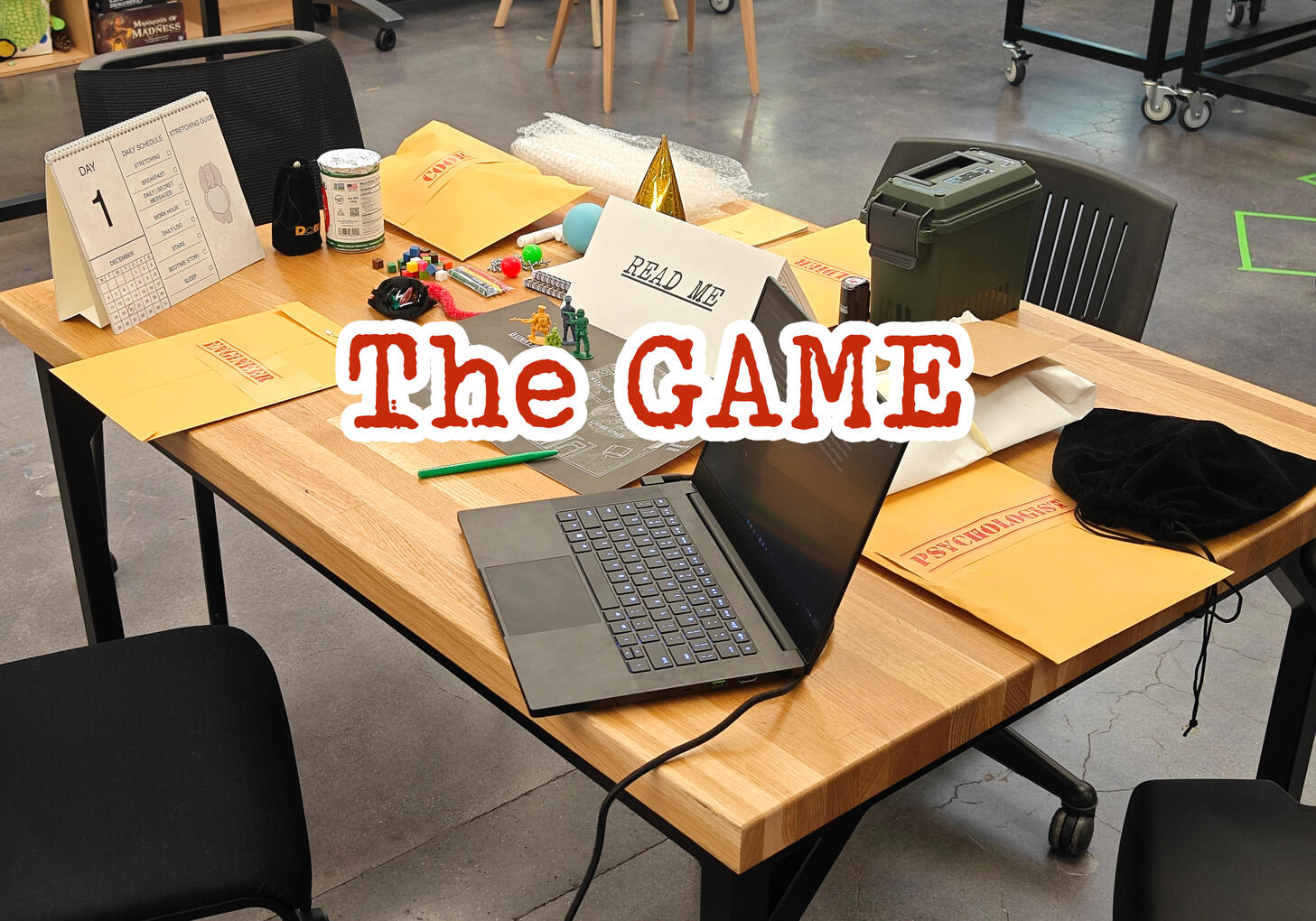
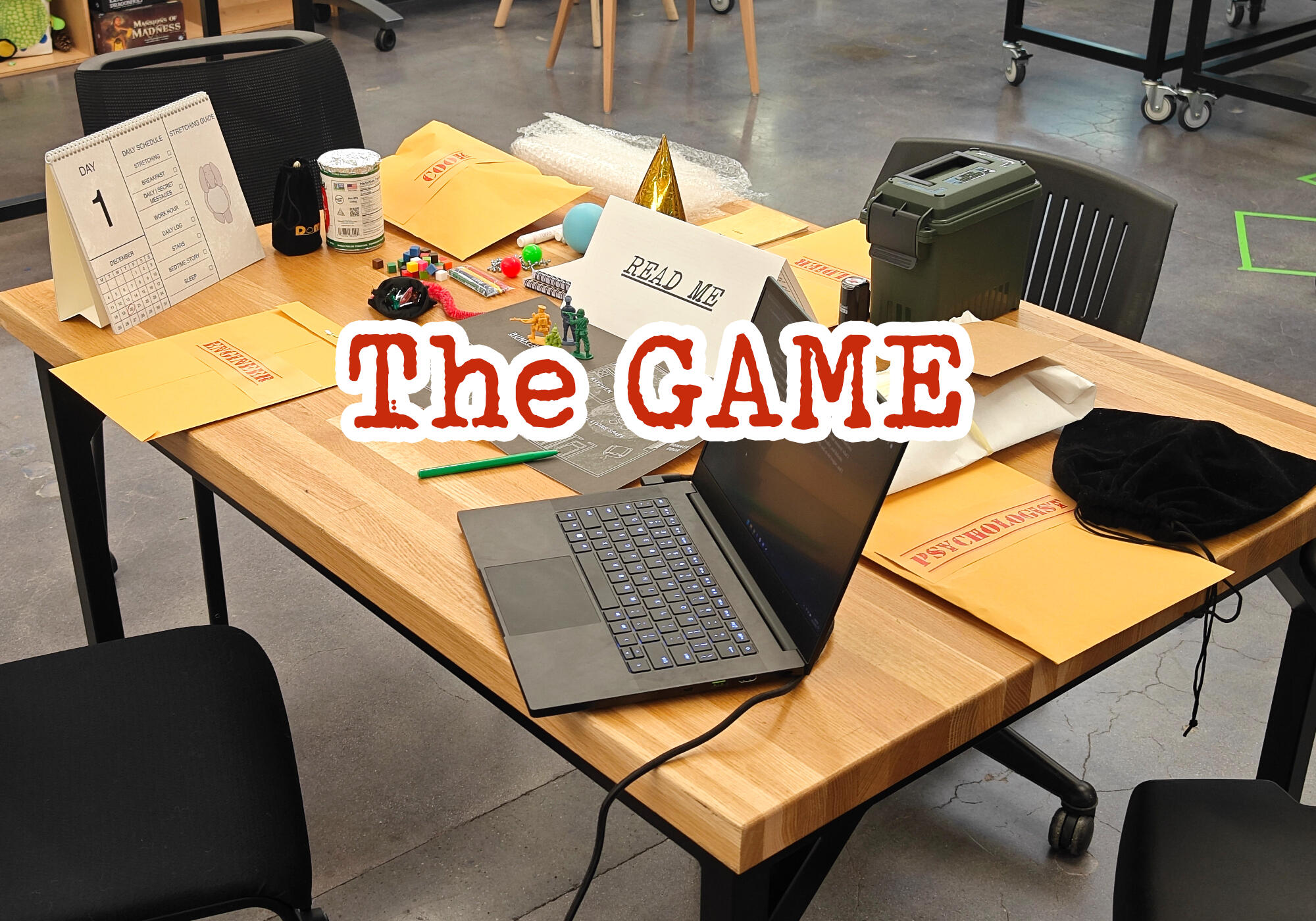
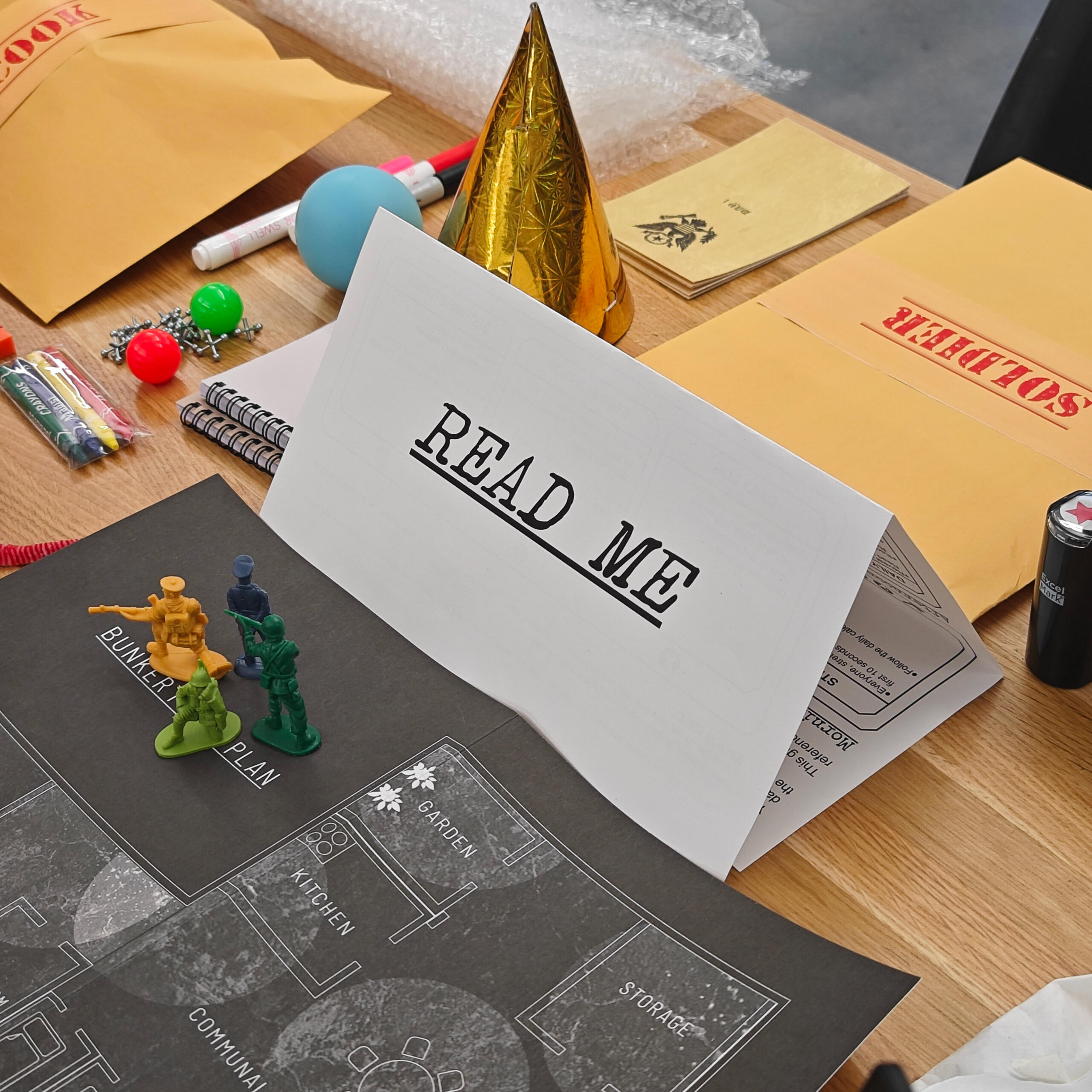
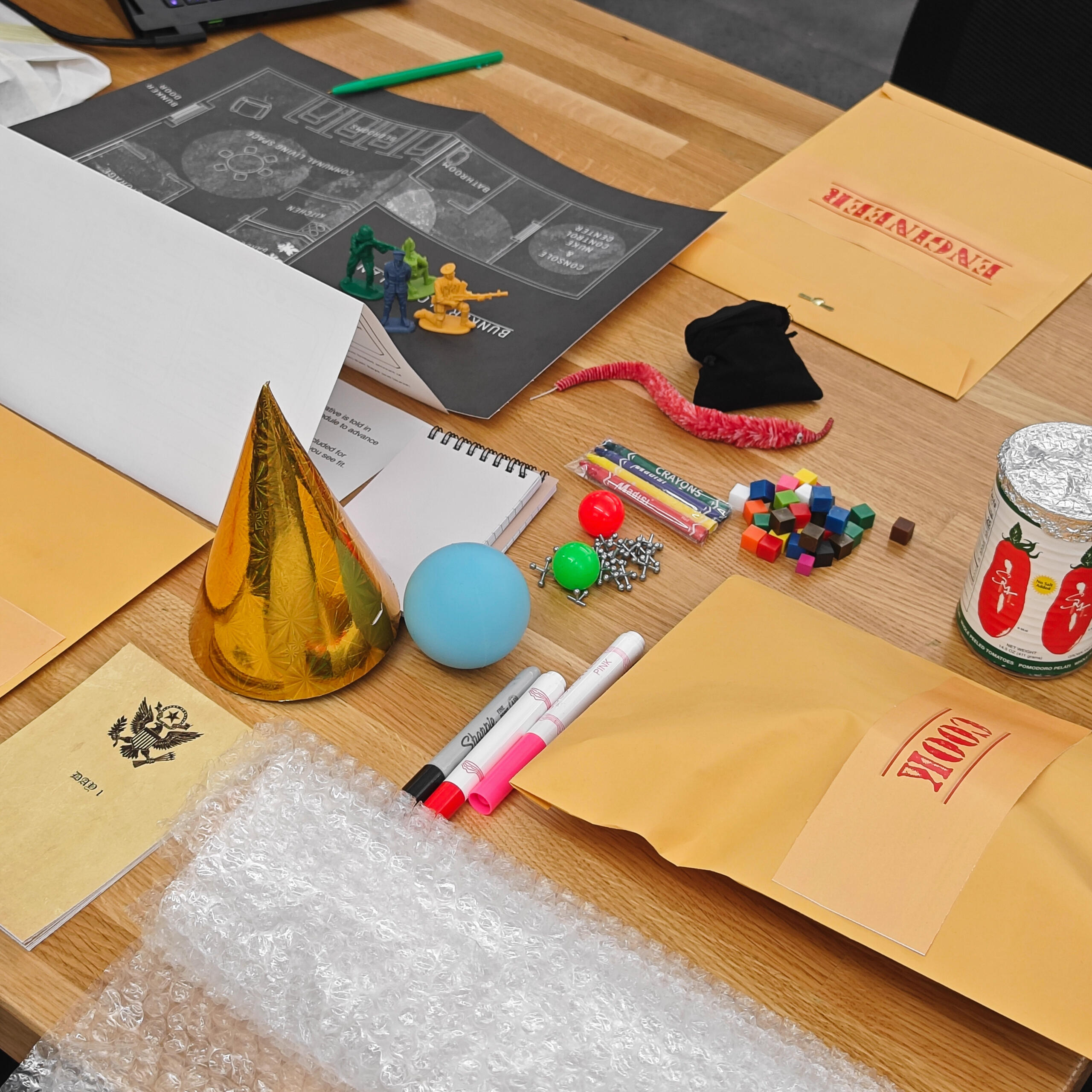
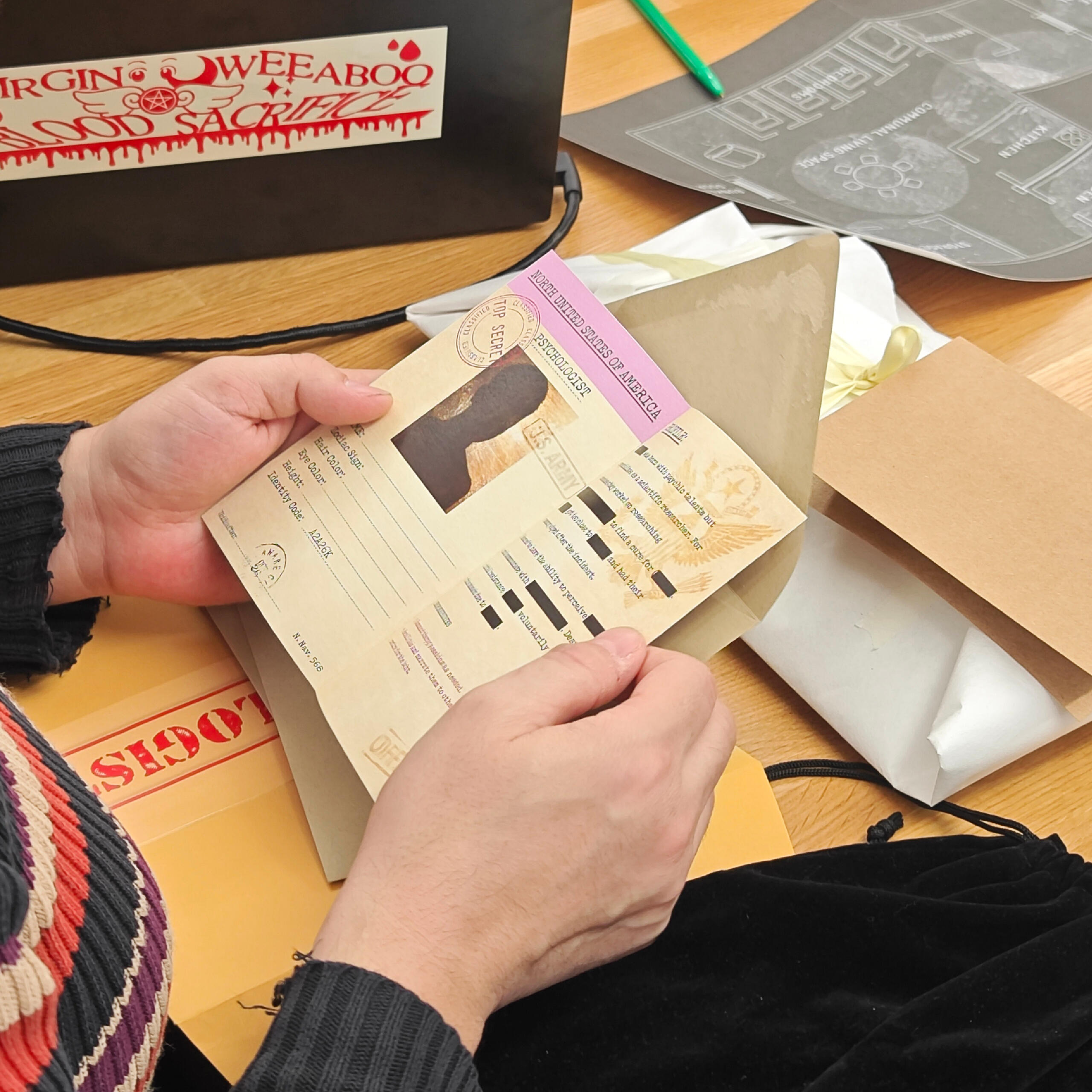
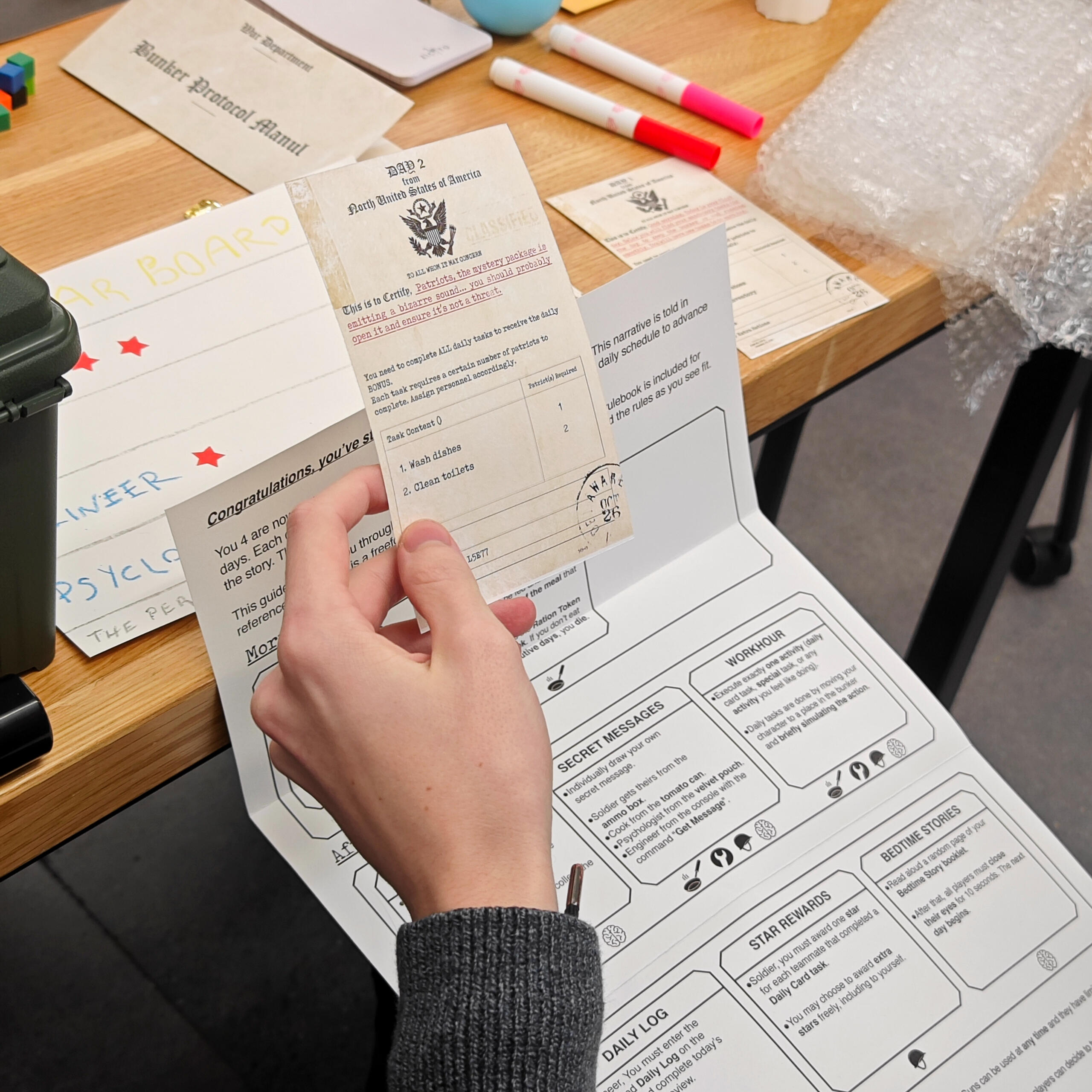
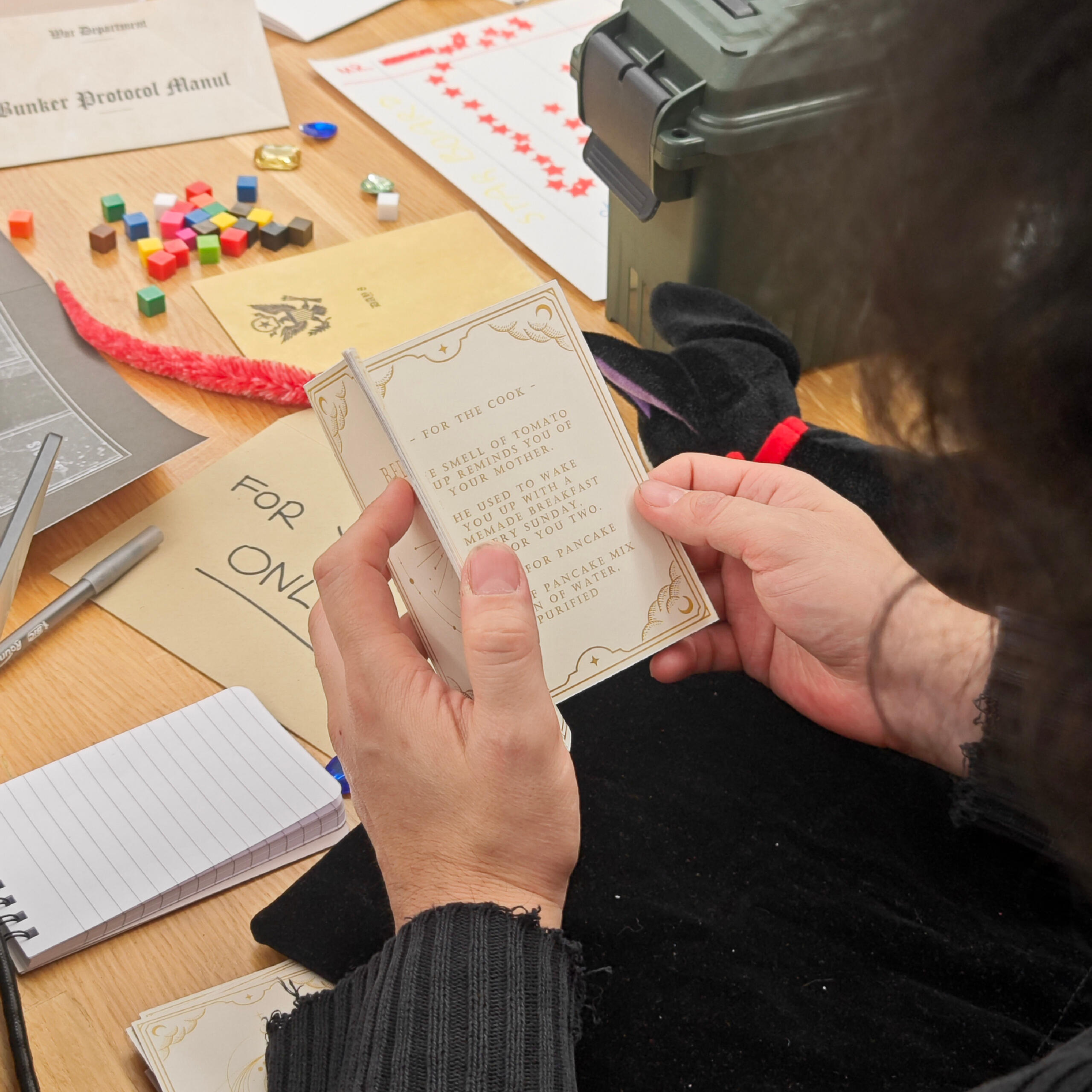
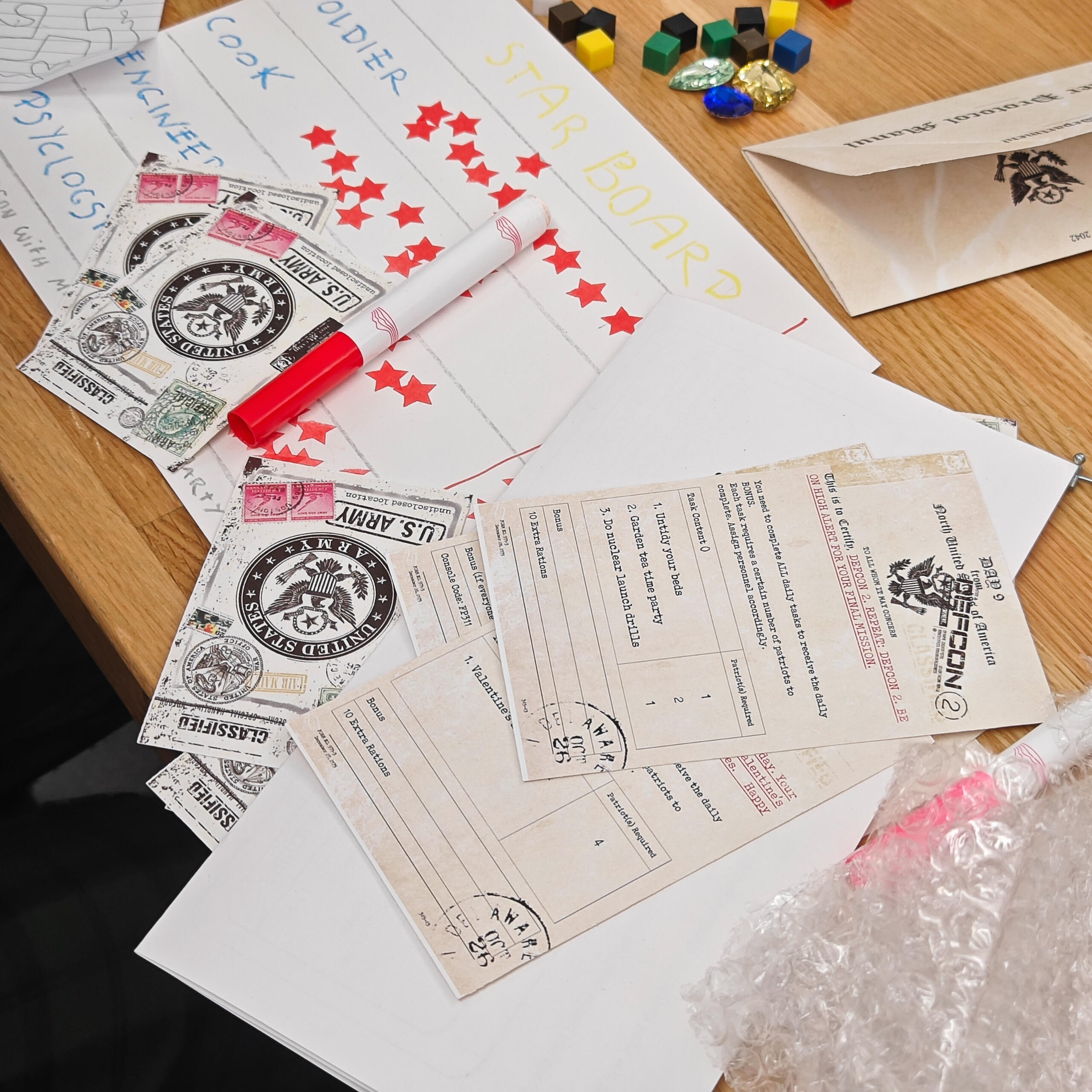
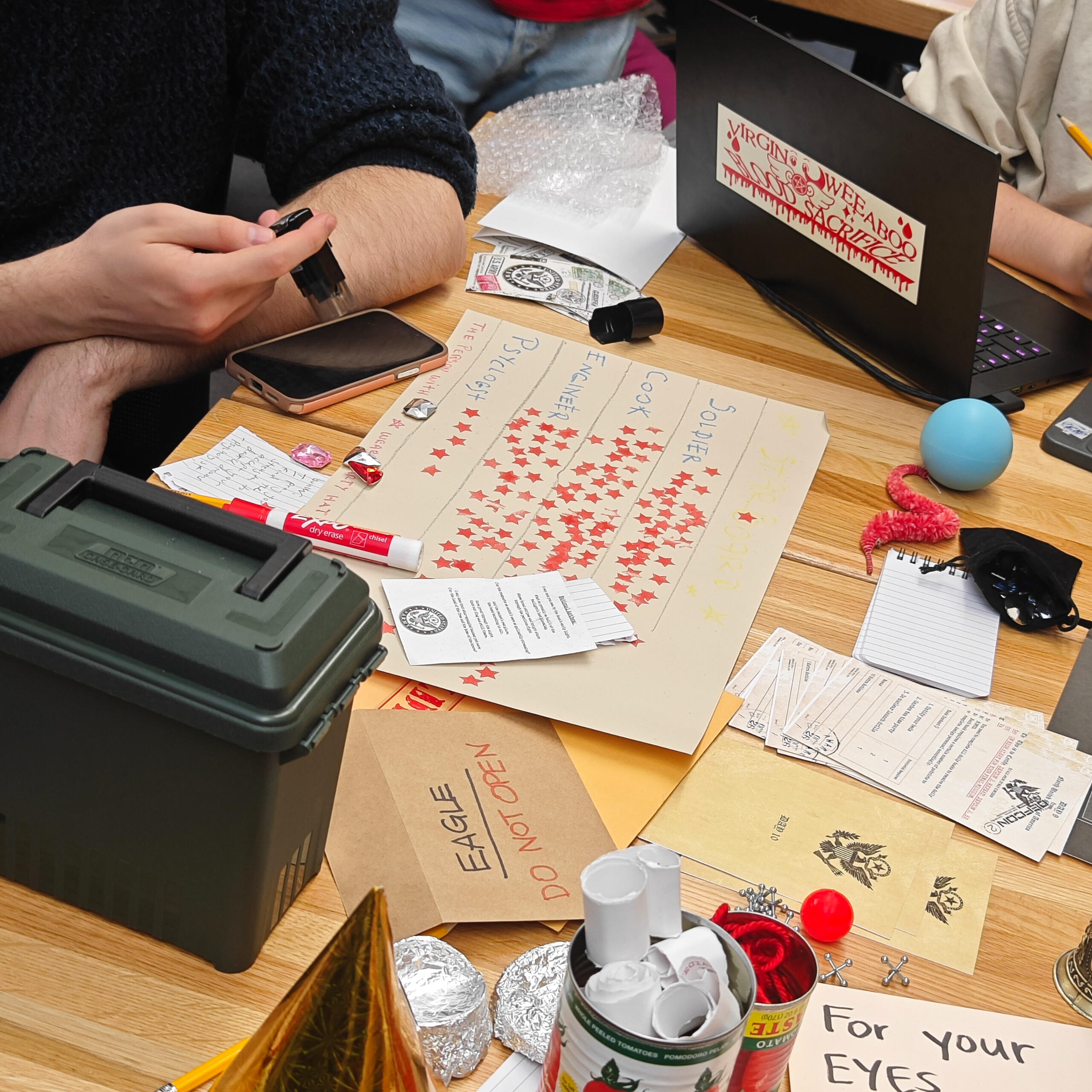
The Game is a cooperative tabletop game offering an immersive role-playing experience inspired by Donald Barthelme's short story, "Game."Players take on unique character roles within a confined bunker environment, compelled to follow a strict daily routine mandated by the government. They must face pivotal decisions regarding collaboration as they contend with their situation and navigate the evolving storyline.Designers
Antonio Andrade, Dabu Lyu, Nichole Shinn, Vivian ChenGame Page
Game Sellsheet
All Available Printable AssetsTools used in creating this game
Adobe Photoshop, Adobe InDesign, Figma
Design Statement
Design Statement

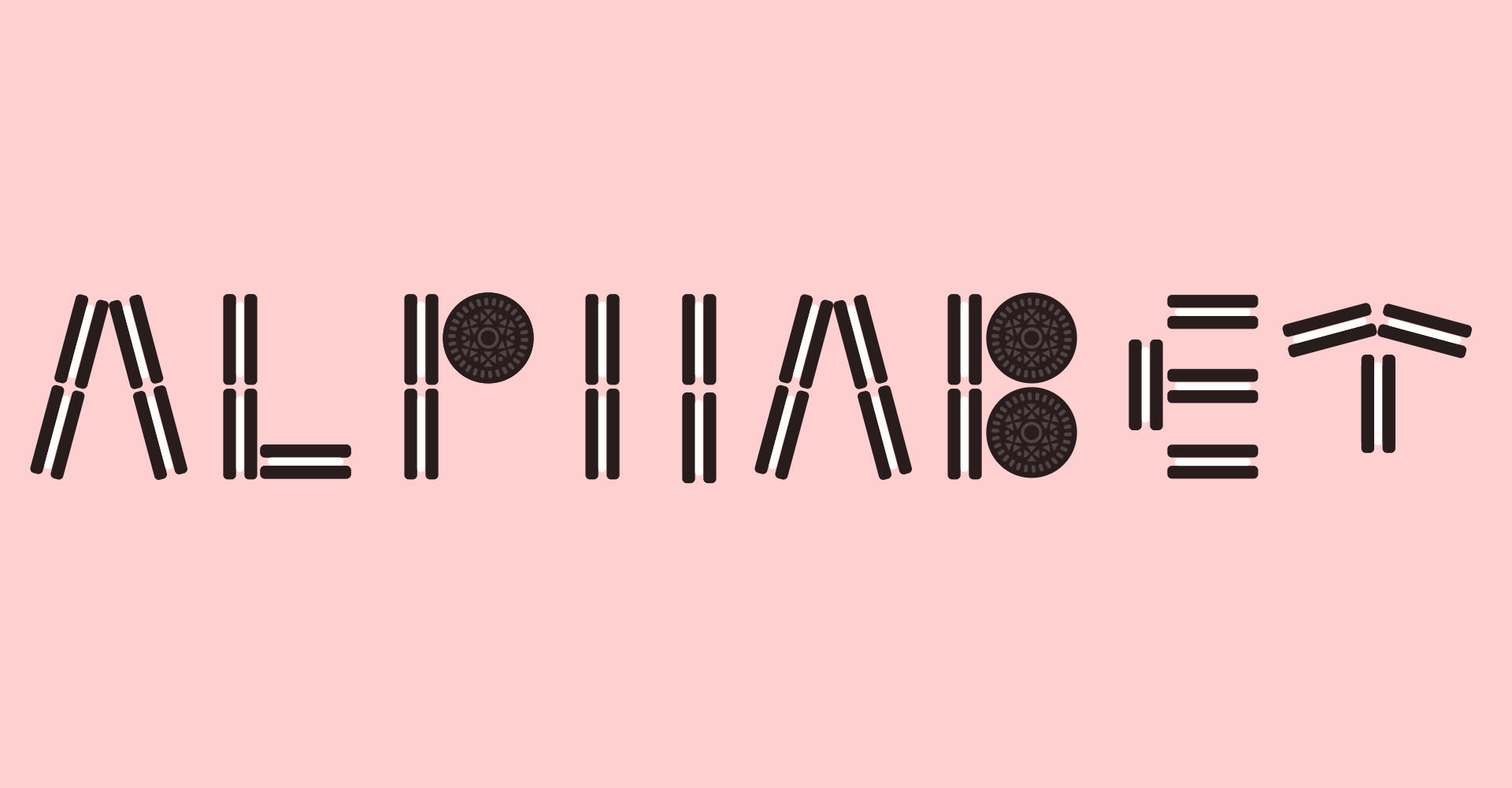

Alphabet: Oreo Time
Interactive Art, 2018
As my academic assignment, Oreo Time stands as an interactive art piece crafted through creative coding, with all elements generated through code.My lecturer, Tom White, provides the foundational libraries based on P5.js. Through my design, inspired by everyday life, Oreo Time transforms food elements into artistic creations, using the various angles of cookies to form the elements of letters.Control
Keyboard Keys - Interact by pressing keys on the keyboard when viewing the project on the webpage.Project Page
Oreo Time

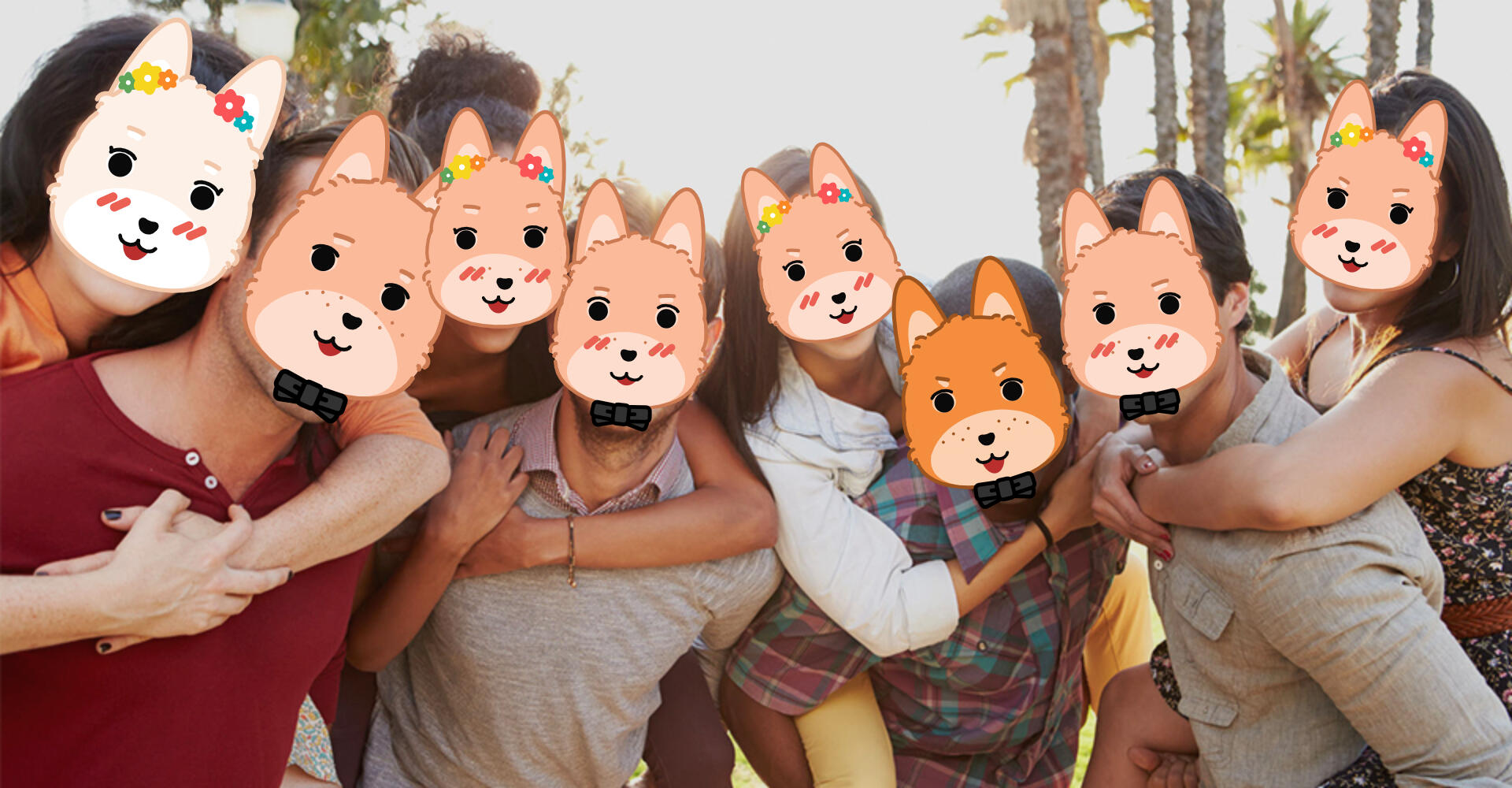


Face Mappings: Foxy Friends
Interactive Art, 2019
Foxy Friends is an academic assignment, and also an interactive art piece centered around the theme of face mapping, created through creative coding. The core methodology of this project was established by my lecturer,
Tom White, while I took charge of designing and implementing the artistic aspects through code.Foxy Friends represents an early exploration and practice of my fascination with the "animal" theme. With code, the project identifies critical facial features in photos and transforms them into more artistically expressive representations.Control
Mouse and Keyboard - Interact with the project on the webpage's canvas by dragging sliders with the mouse and switching images using the keyboard's arrow keys.Project Page
Foxy Friends
Easter Eggs: More Than an Extra Content
Research Paper, 2023
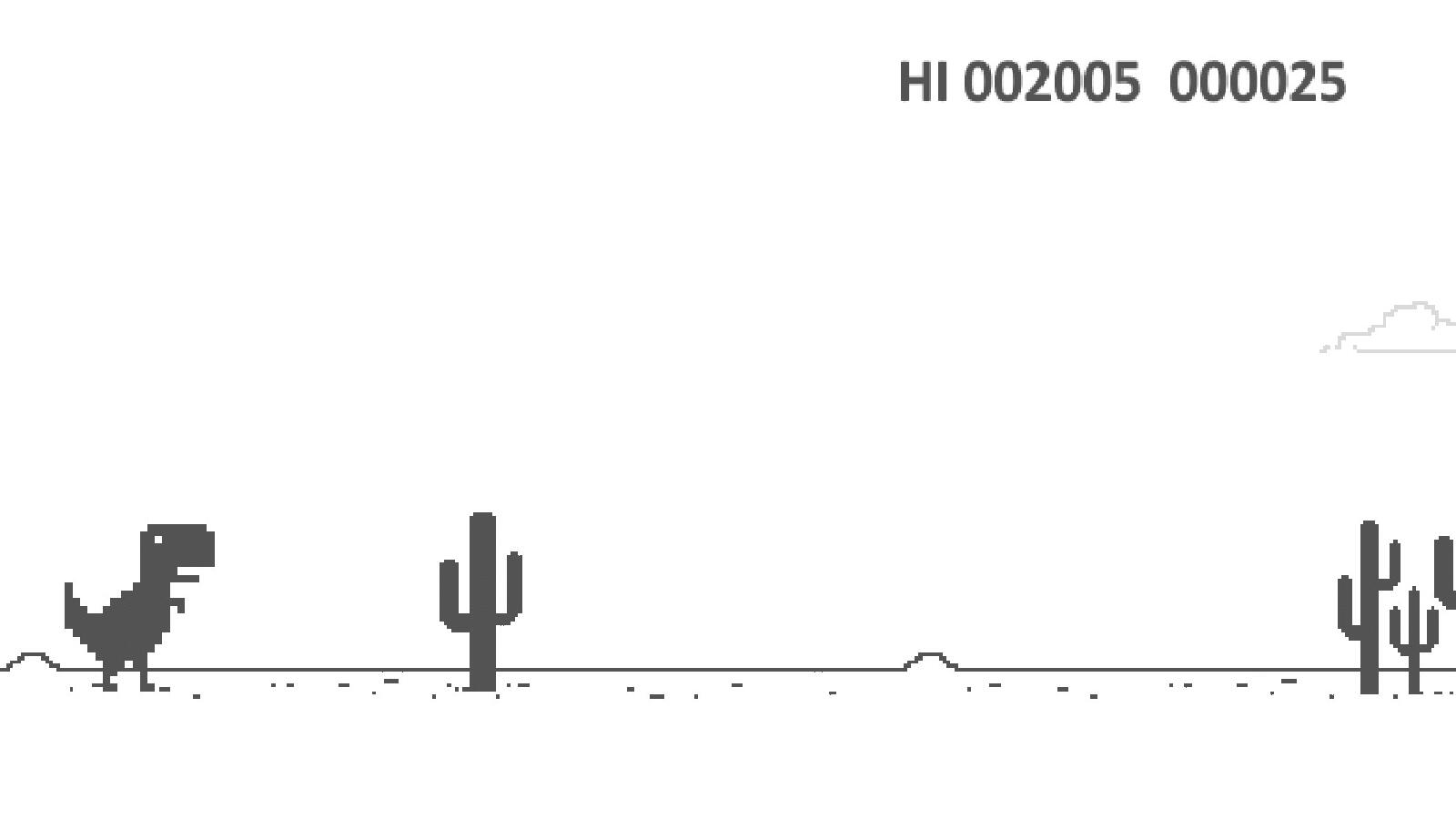
When we disconnect from the internet, open the Google Chrome browser, and come across that adorable, pixelated little dinosaur, we're gazing at an "Easter egg"—an undisclosed feature placed within a medium, typically concealed from the public eye until revealed by a user (Rodenberg).Easter eggs in games come in a multitude of forms and often have little to no impact on the main gameplay or mechanics. Nevertheless, players have long been enthusiastic about uncovering the hidden content within games, relishing in discussing and sharing their discoveries. Why do gamers find such seemingly inconsequential features so appealing? What are they drawn to about these "extra" functionalities?When it comes to these questions, the instinctive answer is always that Easter eggs are a form of "surprise" within games. Players often find these intentionally concealed elements by game developers to be intriguing because they generally differ from our regular expectations and experiences. This sudden, accidental find disrupts the routine pace of the game, injecting dynamism, and arousing the curiosity and desire for exploration. Easter eggs offer a sense of freshness and excitement. However, once the initial rush of discovery subsides, when we focus on the content of the Easter Egg itself, it may be a vessel for a tribute to other works, a hidden narrative, or perhaps a commemoration of a particular person. Alternatively, it could simply be a playful joke from the creators. Nonetheless, it is these underlying layers that truly captivate players beyond the initial thrill.As a profound movie scatters subtle details throughout the film, inviting the audience to revisit and discuss, Easter eggs serve as one of the narrative aids tucked away in the corners of video games. Their presence renders the game's world more comprehensive, enhances the persuasiveness of the storytelling experience, and adds flavor to players' gaming journey. The story fragments carried by Easter eggs provide additional details to narratives, enriching the game's mood. Particularly in games with expansive worldviews like Blasphemous, more detailed elements bring forth greater authenticity and credibility, thereby convincing players of the world's background and ongoing events, fostering immersion and resonance with the storyline. An Easter egg exists in
Blasphemous I where the player, as the "The Penitent One," can pet a randomly appearing dog in scenes—a seemingly adorable detail. The same dog appears in Blasphemous II, set centuries after the conclusion of Blasphemous I, near the coffin where The Penitent resurrects. Yet, as the player attempts to approach and pet it once more, its phantom dissipates in the wind.For players familiar with Blasphemous I, this performance is a callback and reference to the previous game. More importantly, it echoes the passage of time within the game world and implies the inexorable passage of time and the transience of existence, which directly accentuates the tragic undertone of Blasphemous's story.Easter eggs help the narrative, such a vital component within the magic circle, to express the principal themes of a game. Moreover, through Easter eggs, game developers bridge between the fictional and real worlds, propelling the game's core ideas to greater heights. They are the mediums carrying the essence of the game in and out of the magic circle. Take, for instance, the Overwatch map Lijiang Tower, where there's a set of space suits labeled "Hongyu" on the chest, with the background displaying "Heroes never die." This Easter egg commemorates a university student named Hongyu Wu, who valiantly sacrificed himself on May 23, 2016, while bravely intervening to stop car thieves (Sarkar).Heroes in Overwatch are characters who save others, and so does Hongyu. The game's tagline states, "The world needs more heroes!" Perhaps due to its nature as a competitive game, players often focus more on winning rather than pondering the game's implications of heroism. This particular Easter egg and the discussions it sparked within the community have prompted players to pause and contemplate the meaning behind this phrase. It encourages reflection on the game designer's definition of "heroism"—that even if we are all ordinary individuals, as long as we selflessly dedicate ourselves to others, we are heroes. At the same time, Blizzard, within a world brimming with fictional heroes, honored a real-world hero with this Easter egg. It not only stays faithful to the core ideals of the game but also signifies the developer's stance on its community: a compassionate, humanistic gesture that extends empathy and care for the community members.Of course, sometimes Easter eggs aren't always so "serious." Some of these Easter eggs, which also exist beyond the magic circle, are born out of the creators' playful jests. A representative example is in the video game The Witcher 3: Wild Hunt, the witcher Geralt of Rivia can stumble upon a quest somewhere, seemingly aimed at finding a missing chicken. The quest description reads, "Find this chicken, seems like it ran into a cave in a certain village." As players reach the indicated location, they find the cave does exist. However, upon entering it, instead of a chicken, they encounter an unexpectedly enormous goose! Certainly, the Easter egg here is an innocuous, teasing humor from the developers. It indeed brings joy and surprises to players, but what else? Beyond the players, as game creators, why should we pay more attention to the Easter eggs?Within the realm of games, we, as designers, utilize everything at our disposal—be it conceptual ideas or tangible assets—to craft our creations. We incorporate these whimsical or nonsensical elements to infuse a sense of novelty, encouraging players to explore and delve deeper into the game world. Nevertheless, we mustn't forget that games are not only created for players; they also bear and encompass the hearts of us. As we study the impact of Easter eggs on players, we shouldn't overlook their greater potential for us, the developers. Easter eggs, with their informal stance and relatively independent nature from the game itself, offer us a more significant potential for self-expression.Easter eggs can be a designer’s signature to their works. The inception of the widely recognized first Easter egg in gaming history was a creator's statement of their "copyright." In 1978, Warren Robinett developed a game, "Adventure." In this game, he designed a hidden level that, when found by players, triggered a flashing message on the screen displaying "by Warren Robinett." Robinett included this Easter egg because he was dissatisfied with Atari, the company he worked for at the time, prohibiting the inclusion of credits for game developers. After pouring so much effort into the game, Robinett couldn't let his work go unrecognized. Hence, he chose to leave such a stunning "signature" accompanying the story and personalities belonging to the designer "Robinett" (Lu). Players witnessed, through this Easter egg, a game developer who stood up to defend the rights of creators despite being in a position of disadvantage against the powerful.At many times, Easter eggs possess the ability to break the fourth wall, providing game developers with a direct channel to communicate with players (Huang). They allow players to look into the minds of the designers, feeling a closer connection with people behind the scenes. Another example is the story of the developers of the game Dying Light and their unwavering dedication to "chickens." During the development of the DLC "The Following," designers aimed to add chickens to compensate for their regret of not including animals in the initial game release in 2015 due to an overhauled engine. Unfortunately for them, the idea was ultimately abandoned as studio executives found animating chickens and developing their AI too costly. Yet, this wasn't the end; the setback didn't deter these designers; it transformed into what became known at Techland as "Chicken Gate," a running joke to add chickens to The Following wherever the designers and artists could. Graffiti of chickens can be found in various game scenes, and players could even discover a blueprint to craft a chicken-shaped weapon (Hester).When players uncover the story behind these chicken elements, even if they're not consciously aware, they can sense the production team's dedication to "chickens" and perceive a real human touch. As Piotr Pawlaczyk, the lead level designer at Techland studio, mentioned, "We’re all human after all and we see the value in Easter eggs for both the players and for us as a team" (Hester).As players stumble upon the first Easter egg, perhaps triggered by an unexpected encounter, they initiate a dialogue that transcends the boundaries of the game settings and characters, engaging not only with the role of "game creators" but with the creators themselves. Designers have diverse thoughts and intentions, possessing their own personalities and spirits; thus, Easter eggs are born, carrying these sentiments and delivering them to the players. Whether in images, models, or texts, Easter eggs remain assets within the game. However, their significance far exceeds this role.While Easter eggs may be optional extras in games, they are an indispensable part of expressing the personality of the creators, as CD Projekt Red game director Konrad Tomaszkiewicz stated—a way for designers to manifest who they are and to appreciate the things they like, love, and that inspire their creativity (Hester).
Reference:Hester, Blake. “The Costs of Developing Easter Eggs.” Polygon, 20 Jan. 2017, www.polygon.com/features/2017/1/19/14318984/the-costs-of-developing-easter-eggs.Huang, Sibai. “‘第四面墙’这个概念在游戏之中的实践与可能性都有哪些?(Translated as: ‘What Are the Practices and Possibilities of the Concept of the “fourth Wall” in Games?’).” Zhihu, 25 Apr. 2023, www.zhihu.com/question/596748438/answer/3000240884.Lu, Xinyu. “真正的通关,是找到游戏中的所有彩蛋 (Translated as: ‘True Completion Is Finding All the Easter Eggs in the Game’).” Zhihu Column, 3 Mar. 2022, zhuanlan.zhihu.com/p/475206825.Rodenberg, Brendan. “Gaming: What Is a Video Game ‘Easter Egg’?” KX NEWS, KX NEWS, 8 Aug. 2023, www.kxnet.com/news/state-news/gaming-what-is-a-video-game-easter-egg/.Sarkar, Samit. “Blizzard Pays Tribute in Overwatch to Fan Killed in Tragic Accident.” Polygon, Polygon, 1 July 2016, www.polygon.com/2016/7/1/12081430/overwatch-memorial-wu-hongyu-blizzard.
Special Thanks to:Miaka Lee, for assisting me in brainstorming and organizing my thoughts.Jiwen Ding, for providing suggestions about the Easter eggs in the game Blasphemous.Diane Wang, for offering writing advice.Chapin Boyer, for ongoing suggestions and guidance.
Links:Research Paper
Presentation Slides
Game and Feedbacks
Manifesto, 2023
Introduction
In the world of gaming, the symbiotic relationship between feedback and game design is the heartbeat of player engagement and design innovation. “Feedback” is one of the fundamental cornerstones of gaming, yet this manifesto will assert that feedback is not merely a response mechanism; it is intricate language through which players communicate with games and engage in dialogue with developers.
Feedback as a Dynamic Tool
From a design perspective, "Feedback" emerges as a dynamic tool, enabling games to engage and communicate with players. Games rely on "feedback" to form the most essential interactive experience with players. Take video games as an example; controllers, mouses, and keyboards are ports exposed to players. The players input actions, the ports are triggered, and the character actions and camera movements in the game serve as the game responds to the player.This is the most basic mechanical feedback of the game, but it is by no means the full extent of its capabilities. Feedback is also a conduit for games to communicate with players. The camera is more than just the player's eyes; it can convey more than game graphics. In games like The Last of Us, designers use camera language extensively to create a cinematic storytelling experience. Similarly, in Bound, when players control the character in the game, the way she moves and dances, including her body language, affects the player's mood. In these examples, games utilizing visual feedback deliver messages to the players and communicate with them silently.Yet, the communication between the game and the player can gain further depth through intuitive and efficient components – interfaces. The feedback brought by the interface can be the process of revealing the card in traditional physical games, or it can be buttons and graphics in digital games. Designing buttons is exciting. They have different states like normal, hover, pressed state, etc. The designer develops different visual expressions for the various states of the buttons to provide feedback on the different stages of the user's interaction with them.Similar to buttons, the icons in the game also change visually when the player uses potions or skills, telling the player the cooling time or the effects of the skills. The feedback brought by the interface is not only a mechanical response to the player's input, but it also carries the game’s subtle information and delivers it to the player, fostering a deeper connection with them.When we designers think about game development from the standpoint of "feedback," we focus more on approaches and methods. We consider more about "how" to deliver than "what" to deliver. For instance, the unique charm of audio design in games is not limited to “when” but depends more on the usage of tonnes of sound effects to express different emotions. We employ cheerful sounds to celebrate the player's leveling up or descending melodies to render the player's frustration when they fail. In games such as Final Fantasy XIV, designers will fade in a chaotic crowd sound effect, including people talking and laughing, to better integrate the player into the game society and create a sense of immersion when there are more than a certain number of other players near the player's location.Likewise, we design choice branches for narrative, predict player activities, and provide different storylines as feedback for the player's choices. In games like Detroit: Become Human and Mass Effect series, narrative branches enrich the content and replayability of games, as well as acknowledge and respect the player’s agency. "Feedback" is the response games give to players, but it also extends beyond the surface, expressing the core gameplay and essential design intention to them through these branches.
Feedback as Critiques
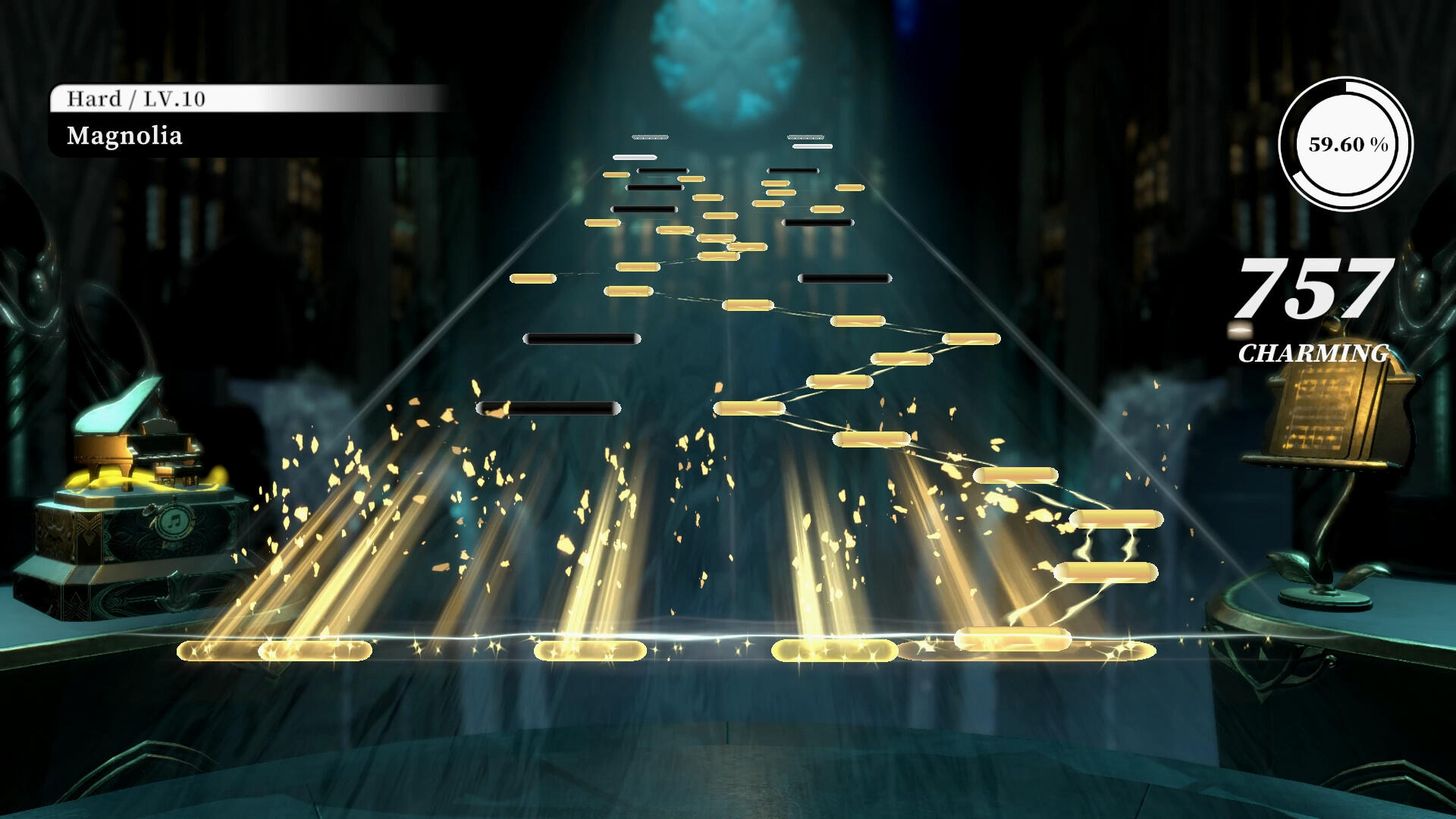
A well-crafted feedback system is not just a response mechanism but a language, a dialogue between the game and the player, shaping their interaction and immersion. Yet, when this conversation falters, when the feedback is lacking or poorly designed, players notice. They feel the absence keenly, and what emerges is often a critique, a verdict that a game falls short, which, in other words, is “feedback” to the game overall.Examining games like Big Rigs: Over the Road Racing serves as an example. One of the primary reasons Big Rigs is criticized is its absence of feedback mechanisms. Essential elements like collision detection, realistic physics, and opponent AI are virtually nonexistent. Players receive no meaningful feedback about their actions, leading to a disconnected and unsatisfactory gameplay experience and, ultimately, the collapse of the game's reputation.Players are enthusiastic to evaluate and rate games through various media. Even if they don't publish authentic critical reports, they constantly generate ideas and reflections while playing the game.What's even more interesting, however, is that while players are continually providing feedback on the game, the game is also criticizing players regularly, either subtly or openly. This detailed critical evaluation operates across gaming genres, from the gentle nudges of KDA systems in shooting and MOBA games to the harsh trials of Souls-like adventures. More obviously, in rhythm games, such as Cytus and osu!, intuitive visual and auditory cues guide players, meanwhile demanding extreme precision in their every response. With each click, the game scrutinizes the player's performance, offering real-time critiques. In the process of playing a song, players often find themselves facing hundreds or even thousands of judgments from the game. It is not uncommon for players, confident in their flawless performance, to be met unanticipatedly with the game results summary report filled with “miss” and “bad,” reminding them that perfection remains a rare feat.Nevertheless, take a closer look at the design intent; beneath overt critiques lies an exchange, an unseen conversation through reviewing between game design and player experience. From a design perspective, we, as excellent game developers, craft these challenges purposefully. We understand that in the face of adversity, players discover resilience. Every missed beat and every unachieved goal becomes a stepping stone, encouraging players to persist, practice, and eventually conquer the challenge. These evaluation criteria are not arbitrary; they are carefully designed to guide, motivate, and inspire players to push their boundaries and attain mastery.
Feedback as the Bridge
At the same time, from another aspect, as players keep engaging with games, their playthroughs and feedback become the foundation upon which a bridge between developers and gamers is constructed. The player's reaction to game mechanics, their gameplay style, and their critiques form a multifaceted lens through which game designers perceive their creation.By keenly observing how players interact with the game, developers gain valuable insights into not just player preferences but also loopholes and shortcomings within the gameplay and mechanics. With this understanding, game designers can refine games further, ensuring a more satisfying and sustainable gaming experience.For example, there was a loophole in The Witcher 3: Wild Hunt that in White Orchard, players could effortlessly kill cows and get hides for gold, which had been exploited to obtain a lot of gold in a short time, destroying the game's economic system and causing players quickly lose interests of the game. To fix this, the team first added a tax collector to the game who would visit the player and ask if the player had ever engaged in the wholesale trade of rawhide in the White Orchard area as a gentle reminder. Yet, most players ignored this and still slaughtered these cows for profit. Hence, the production team later added the "Cow Guardian," a high-level monster named "Chort" would rush out from the bushes to attack the player, which is lethal for most average players. Eventually, such a solution effectively prevented players from farming gold in the game.In this case, game designers are problem solvers, with the help of the player’s feedback, identifying the most efficient and suitable method for solving the glitch. The player, in this context, became an active participant in the game's evolution, their actions and responses serving as vital influencing factors that shape the game's development trajectory.As game designers, we thoroughly playtest our games and value player feedback before release. Equally important is our continuous scrutiny of how players engage with game mechanics and experience gameplay during widespread play. It's crucial to actively seek player input, adapt dynamically, and closely observe their responses. Above all, never underestimate the intelligence and creativity of your player base.In essence, players, as they dive deeper into the game, co-create the game world with game designers, infusing it with their originality, emotions, and unique interpretations. The feedback loop intertwined between players, games, and game designers extends beyond technical aspects and involves more emotional engagement and imaginative exploration. Therefore, “feedback” constructs a two-way bridge between players and game developers and paints a vivid picture of collaboration, where developers and players weave intricate stories, crafting not just games but shared experiences.
Special Thanks to:Miaka Lee, for assisting me in brainstorming.Chapin Boyer, for ongoing suggestions and guidance.
Links:Manifesto
Dance, Gaming, and Narrative
Critical Play Report, 2023
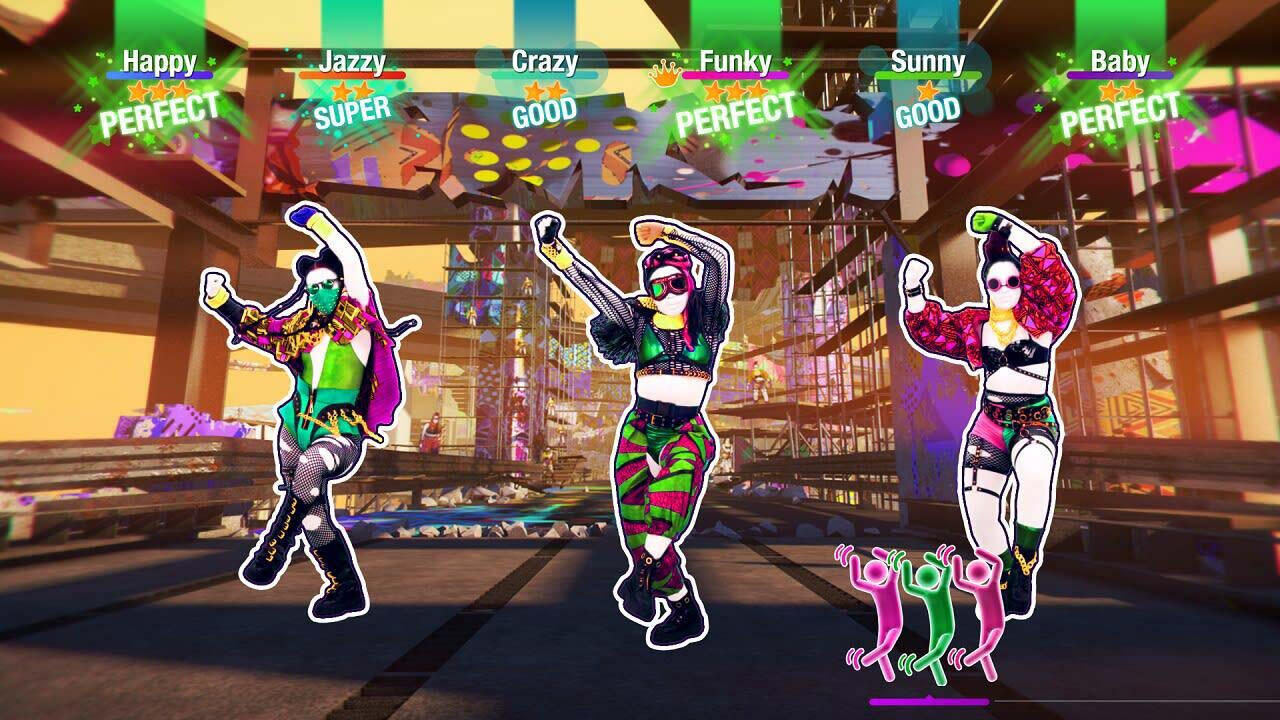
Within the realm of gaming, an intriguing convergence unfolds at the intersection of performance and expression when discussing games and dance.The marriage of dance and games is not a new concept. Dating back to 1998, games like Bust A Groove introduced the idea of controlling characters to dance through button presses, rhythm, and on-screen arrow cues. Yet, at this point, these interactions were limited to finger movements, creating a gameplay experience reminiscent of traditional button-mashing mechanics rather than genuine dance. However, during the same era, the evolution of dance games like Dance Dance Revolution marked a significant shift. Players were encouraged to engage physically by incorporating bodily movements.Just Dance, a later addition to the genre, revolutionized the experience by utilizing motion controllers to capture players' movements. From my personal experience, it provided a refreshing experience not only due to its novel method of motion capture but also because it discarded the "classic" abstract visual cues of arrows in favor of concrete video guidance, which provides a more "natural" dance experience akin to following a personal coach. From a design standpoint, Just Dance was crafted for “amateur dancers” to experience dancing with less burden. Players were spared the frustration of missteps as their figures and movements were not visible in the game. This absence of visual feedback enhanced players' confidence, allowing them to focus more on the music and the act of dancing. At the same time, unlike professional dancing, which demands breaking down and memorizing complicated moves, the game employed video and symbol guidance, enabling players to dive into the dance swiftly and effortlessly.However, there was a downside. Just Dance's scoring system, a typical gaming feature, affects and overshadows the player's dance experience to a certain extent. In the movie Ready Player One, Parzival's initial reaction upon entering the gravity-free dance floor, "I don't think this is it, no scoreboard, no obstacles," echoed traditional gaming expectations. Just Dance, unfortunately, did not break away from such expectations. Implementing motion capture and movement evaluation added a competitive edge, shifting players' attention toward the game's scoring. Moreover, a mistake or a misjudgment by the controller's sensor could induce panic, disrupting the dance rhythm and spoiling the overall experience. True dance, in my perspective, entails engaging the entire body, not just hands. Therefore, I find myself more drawn to the controller-free experience, which allows me to immerse myself entirely in the music, connect with my inner rhythm, commit myself to the dance, and feel more “expressive.”In essence, Just Dance prioritizes "dance," utilizing "games" as a medium. Conversely, several other games emphasize "games," incorporating "dance" as an element or mechanism. For instance, in Bound, the protagonist's balletic movements create a unique visual presentation and express a feeling of the character inside the game performing for the player, the audience beyond the screen. Yet, my disappointment and regret arose when the dance element in Bound remained detached from its deeply moving narrative. In my belief, dance is more powerful than an external appearance. Dance possesses an inherent storytelling power. Music and dance, intertwined, own the ability to influence moods and emotions, forming a compelling narrative. In films such as Singin' in the Rain, taking the iconic scene featuring Don Lockwood's performance in the rain as an example, music and dance seamlessly blend into the narrative, conveying the character’s overwhelming joy as he embraces his true love and evoking profound emotions in viewers.Regrettably, my search for games seamless interplaying with music, dance, and narrative led to sparse findings. Most games treat "dance" as a social or mechanical element while overlooking its potential as a narrative technique. One imperfect exception is Beauvoir, the diva character in NieR Automata. Beauvior has her own musical theme within the game. When engaging in battle with her, she moves and acts like an opera performer and attacks following the rhythm of her music. During the battle, the player will gradually uncover her life stories. Nevertheless, these narratives are presented through cutscenes and dialogues rather than being integrated into gameplay interactions.
Links:Critical Play Report
Disability Studies, Mental Health, and Games
Critical Play Report, 2023
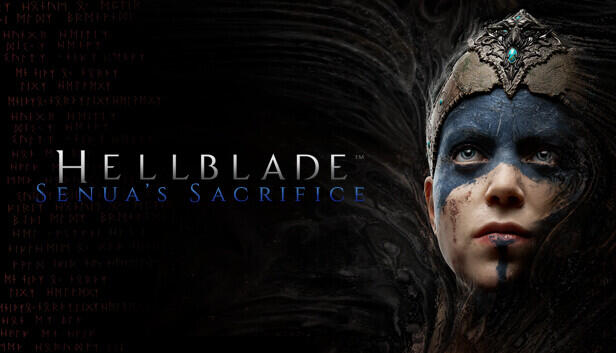
In the paper by Dunlap, K. & Kowert, R., they introduced the concept of the multidimensional expression of mental illness in games, which includes the 2D portrayal, described as a defining element, often used to explain a character's behavior or backstory; and the 3D portrayal, fully realized and an essential component that reflects authentic experiences. In my view, the 2D portrayal leans towards using mental issues as a means to narrate another theme. This reminds me of the mystery movies that use dissociative identity disorder as the core of the puzzle to engage the audience and reveal the answer at the end. Yet, the essential idea of these movies is usually not to discuss mental issues itself.In a medium like games, due to its unique interactivity and ability to deliver engaging experiences, it appears to have more potential to utilize 3D expression, immerse players in the journey of being a patient, and engage in more serious discussions about mental health itself. Hellblade: Senua's Sacrifice seems to fulfill this expectation. The game's use of Binaural Audio technology mimics the paracusia, and the level design simulates hallucinations, which are both common symptoms in individuals with schizophrenia. Simultaneously, through its narrative, the game tells the story of a “patient” with mental illness seeking self-acceptance. However, from my perspective, expressing mental health subjects through games is highly challenging, and game design inherently has limitations in such creative endeavors.From a design standpoint, I believe the most crucial questions are "why" and "who." What is the purpose of introducing mental illness into games? And who is our audience? Mental health issues are extremely complex, and people's mental states are not binary. If we consider mental states as a parameter, where 0 represents complete health, and 10 represents severe illness, I believe the majority fall somewhere in between. When we design a game aiming to simulate symptoms of an illness, to educate those closer to 0 on this parameter about mental illness, and to draw their attention, we face the challenge of balancing accuracy with entertainment value. While games can simulate certain symptoms or experiences associated with mental illness, accurately capturing the full complexity and reality of these conditions is difficult. Games like Hellblade: Senua's Sacrifice often receive acclaim for their attempt to depict mental health issues authentically. Yet, even in such games, the experiences depicted do not represent the entirety of schizophrenia accurately, such as bypassing the disorganized thinking commonly associated with schizophrenia, due to the constraints of gameplay mechanics and narrative pacing. Game developers created a character, but this character's traits cannot represent all aspects of the illness. Meanwhile, faced with such challenges, we opted to simplify and systemize the concept of mental illness in games, leading to another problem: we've missed some depth and scope. Mental issues encompass a wide array; even within anxiety disorders alone, there are generalized anxiety disorders, social anxiety disorders, separation anxiety disorders, etc. Their symptoms vary widely, and their causes are diverse. They cannot be simply categorized as merely fearing "being harmed," "being unloved," or "being a bad person," as portrayed in the game Adventures With Anxiety. As a result, games of this nature may not be comprehensive in an educational context.When we shift our focus to those closer to the 10 end of the parameter, intending to make them feel understood and cared for, we seem to easily overlook individual uniqueness. Every person dealing with a mental health condition has a different situation. Not only do their symptoms differ, but more importantly, they come from different backgrounds and have different causes for their conditions. In other words, when it comes to “understanding” and “care,” they have different needs. At the end of Hellblade: Senua's Sacrifice, the voice says, “Never forget what it is like to see the world as a child.“ Perhaps for many, childhood represents the most innocent and beautiful times. However, as someone with childhood trauma, hearing that statement did not evoke relief but rather my unbearable memories.Admittedly, a single game cannot encompass all aspects of such a complex topic as mental illness. However, I still anticipate more games designed with the theme of mental health, whether as medical models to arouse individual players’ awareness or as social models fostering a more inclusive understanding of mental illness within our broader community. The coverage of a single game is limited, but when enough games exist, as long as one game can touch, inspire, or even change someone's perspective on mental health, then its existence holds significant meaning.
Reference:Dunlap, K., & Kowert, R. (2021). Mental Health in 3D: A Dimensional Model of Mental Illness Representation in Digital Games. Loading, 14(24), 122–133.
https://doi.org/10.7202/1084842ar
Links:Critical Play Report

Incremental Games
Critical Play Report, 2023
Incremental Games, a unique game genre, are often overlooked in game design discussions but hold substantial market influence. More importantly, it can bring us deeper consideration about game development.Incremental games represent a distinct gaming category, standing apart from most other games. As Mr. King highlighted, the gameplay and mechanics of incremental games maintain an "extremely minimalistic" design. A simple input—just a click—and an even simpler feedback—representing an increase of 1 in resources—that's it. In some mid-to-late game stages, resources within the game auto-generate, transforming the player's click from producing 1 resource to making 1 decision. Still, the gameplay only requires this simple click from the player. However, it's this most minimalist game design that often ensnares players, leading them through countless sleepless nights.Why? Why are incremental games so appealing, even addictive? In my view, it's because these games, through the simplest means, the most straightforward game logic, precisely tap into human nature. The operation in incremental games merely requires one click, which is extremely simple and accessible. Regardless of who the player is, their educational background, life experiences, or even whether they comprehend the textual instructions in the game, as long as they understand that the button is "pressable" (which, I believe most people cannot resist—a sleek, slightly 3D-ish button), and they press it, something appears or increases, and they've already stepped into the game. This immediate feedback aligns perfectly with human nature. We humans enjoy seeing our efforts acknowledged and relish feedback for our endeavors. In such games, with minimal effort, players receive a "seemingly decent" reward. In Universal Paperclips, I clicked a button, and a paperclip was manufactured. I received a "reward," even if this reward is merely a concept, something "illusory," not existing in real life. Yet, my brain tells me, "Hey, you changed something; see this number change? It's bigger now!"From a design perspective, in games like Universal Paperclips, the game deliberately avoids friction. It doesn't ask you to craft iron wires or bend an actual wire. From nothing to something, the designer streamlined all the steps and "reduced dimensions" of all intermediate processes. Perhaps you can see the length of your wire, but all you need to do is click, and then a paperclip, conceptually, is born. You've created something, so you receive some joy and satisfaction. Human nature tends toward simplicity and relishes making minimal efforts for decent rewards—much like how most of us have, to some extent, thought about finding a job that demands less but pays well.When these tiny paperclips come together to form a larger picture—a narrative— the game ascends to another level. It's not just about the narrative being an "added reward"; more crucially, all the paperclips now have "meaning." Players aren't only making paperclips but engaging in a story through this means. With Universal Paperclips, players break through repeatedly, propelling the game to the next stage and advancing the narrative to the next chapter, and as a result, they find greater satisfaction. Is this satisfaction fake? Perhaps, because these "achievements" are only conceptual, they don't really exist.But what is real? Must everything be serious? Is all joy without meaning a kind of vice? Or, is it that sometimes life doesn't need to be "meaningful"?In my view, for game designers, creating a game for storytelling, expressing a quirky point, or an absurd idea is enough. I've expressed myself and influenced others—that's meaningful. Even if my game is a joke, seeing the audience's reactions—whether they laugh loudly or furrow their brows in confusion—elicits a response to my work, and that's the most significant meaning for me. Because I've accomplished something, impacted some people, and added a bit of "me" to this world.As for players, in their brain-less moments, repeatedly clicking, observing the numbers on the screen grow larger, watching a more bizarre story unfold, maybe they're stealing a moment in their busy lives, taking a breath, or embracing a period of relaxing. As long as they enjoy their time playing, these incremental games hold meaning. Most of us are already busy enough, and educated extensively—human bodies need rest, and so do human minds and hearts.Perhaps to serious individuals, such games seem like a waste of time, but if the players are finding respite, and pleasure, then it's not a waste. Incremental games are a peculiar presence; they remind us that being not-serious is fine, and having fun is not a sin.
Links:Critical Play Report
Games and Spectatorship
Critical Play Report, 2023
When talking about the theme of "Games and Spectatorship," it took us into the more peripheral aspects of "games" — focusing more on the behavior of the game's audience, or in other words, the cultural impact brought about by games, rather than just the games themselves.When audiences watch game livestreams and competitions, what are they really enjoying? Why do they enjoy watching? I've heard various responses like "It looks cool" or "I like watching the competition," but from my perspective, one of the reasons why esports is referred to as a "sport" is due to its audience having a similar viewing experience to traditional sports matches. People enjoy watching soccer matches for many reasons, and one of the most significant reasons is the sense of belonging and identification. Esports spectators feel the same way. In such an environment, the communal atmosphere often nudges you to develop a bias towards the team you support. When you support the same team as those around you, it creates a strong sense of collective identity and belonging. You understand that you're part of a group; your comrades may come from different backgrounds and have diverse experiences, but they've made the same choice as you. They understand and embrace you, and together, you share a common goal – supporting your mutual choice.Furthermore, when people support a team in competitive matches, they often project their ego onto the competitors and the team itself. Psychologist Robert Beno Cialdini introduced the theory of Basking in Reflected Glory, a self-serving cognitive process where an individual associates themselves with successful others in a way that the winner's success becomes the individual's own achievement. This psychological phenomenon leads us to seek an enhancement of our self-esteem, intertwining our sense of self-identity with the victory and glory of the collective we've chosen. Even though our impact on the match beyond cheering is minimal, we still perceive the team's triumph as equivalent to our own success.Moving beyond esports, there are some dynamic shifts within game live streaming. Even though it's all about streaming games, each streamer possesses a unique personality. This diversity adds more influencing factors and answers to the question of "Why do people enjoy watching." When a streamer showcases exceptional skills and prowess in the game, we appreciate their impressive performances. However, there are also streamers whose technical abilities might be average—or even poor—yet they gather a substantial audience due to their distinctive personalities. Some employ clumsy maneuvers that are comically entertaining, while others exaggerate expressions and actions when things go awry. Overall, even if their streams lack technical brilliance, they are by no means lacking in entertainment value. This kind of lively and entertaining broadcast, filled with theatrics, attracts a specific audience seeking amusement and entertainment. Thus, for this segment of the game live stream spectators, when the streamer wins, it brings them joy, yet even in defeat, they can witness the streamer's humorous reactions. "They" never lose anything; regardless of the game's outcome—win or lose—these spectators derive pleasure and fulfillment from the experience.Watching others playing is intriguing, yet ultimately, it's an indirect experience of games. This prompts contemplation on another question: "Why watch instead of play?" I believe the statement attributed to Martin Seel – "By watching sports, we can enjoy, in our imagination, certain lives that we have neither the talent nor the time to live," offers a compelling answer. We all live within various constraints, and spectating games provides one solution to breaking through these limitations. Perhaps we lack the innate talent or have limited time to hone specific skills, yet by supporting esports teams and projecting ourselves onto them, we compensate for our deficiencies to some extent. Maybe we lack the appropriate equipment or the energy to invest ourselves entirely in gaming, and so, live streaming grants us an almost firsthand window into experiencing gaming content. Alternatively, we might be constrained by human inertia, simply enjoying this entertainment mode that provides enjoyment without personally exerting effort.Regardless, spectatorship forms an integral part of gaming culture. It stands as evidence of our love and passion for games and demonstrates the diverse ways in which we engage with and appreciate them.